咨询热线:18906399575

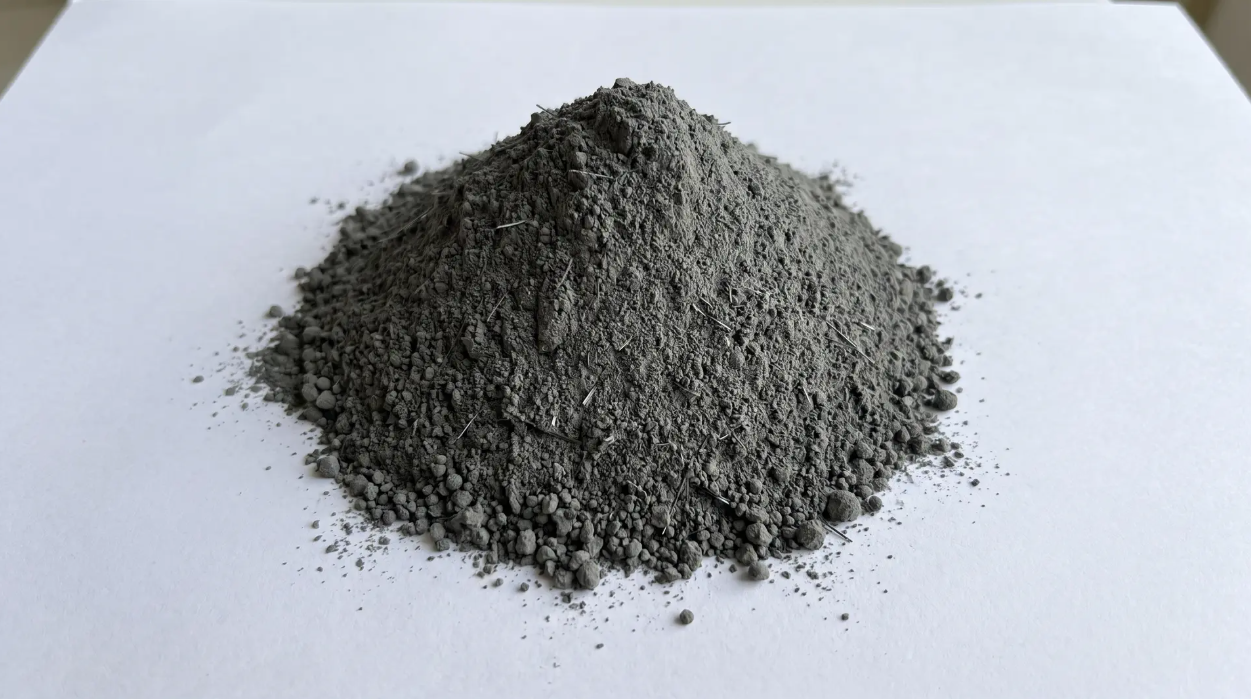
Steel Fiber Castable – A Scientific OverviewSteel Fiber Castable, fully named Steel Fiber Reinforced Refractory Castable, is a high-performance monolithic (unshaped) refractory material. It is manufactured using high‑grade bauxite clinker as the aggregate, high‑quality bauxite clinker and corundum fine powder as the matrix, ultra‑fine powders and various composite materials as binders and additives, plus the addition of heat‑resistant stainless steel fibers. Depending on the raw material composition, it can be classified into high‑alumina, corundum‑based, mullite‑based, and other types.In simple terms, it is like adding “micro‑reinforcing bars” – heat‑resistant stainless steel fibers – into a traditional refractory castable. These fibers are uniformly dispersed throughout the material, forming a three‑dimensional network structure.Why add steel fibers?Refractory castables are essentially engineering ceramic materials. Ceramics are well known for their high‑temperature resistance and corrosion resistance, but they have a fatal weakness: brittleness. Under severe temperature fluctuations or mechanical impact, micro‑cracks are easily generated and propagate, eventually leading to spalling or even fracture of the material, which severely shortens equipment service life and compromises operational safety.So, what was the solution? Scientists came up with an ingenious approach: introducing the “strength of steel” into the “ceramic” matrix. This is the core philosophy behind steel fiber reinforced castables.The addition of steel fibers brings three major improvements:First, enhanced strength and toughness. The steel fibers form a uniformly distributed three‑dimensional network that bridges cracks within the castable, improving overall tensile strength and impact resistance. Studies have shown that the strength of steel fiber reinforced castables can be 30% to 60% higher than that of identical materials without steel fibers.Second, crack propagation inhibition. This is the most critical effect. When micro‑cracks appear in the matrix, the steel fibers act as a “bridging” mechanism – like small bridges spanning across the crack faces – preventing the cracks from further extending under thermal and mechanical stresses. At the same time, the fibers can deflect the crack propagation path, making the cracks more tortuous and consuming more energy.Third, improved thermal shock resistance. The steel fibers absorb and dissipate the stress energy generated by sudden temperature changes, effectively resisting thermal shock. This prevents damage caused by differential expansion between aggregates and matrix at high temperatures, as well as stress from temperature gradients during furnace start‑up and shut‑down.Main application areasThanks to its high strength, high toughness, excellent thermal shock resistance, and good wear resistance, Steel Fiber Castable is widely used in various high‑temperature industrial sectors:Cement industry – Rotary kiln outlets, coolers, coal injection pipes, decomposing furnaces, preheaters, etc. These areas are subjected to both high temperatures and material abrasion, making steel fiber castable the ideal choice.CFB (Circulating Fluidized Bed) boilers – Furnace outlets, side walls, roofs, cyclone separators (straight sections and tops), return feeders, etc. CFB boilers experience high‑velocity material flow and frequent temperature fluctuations, which demand extremely high performance from refractory materials.Metallurgical industry – Reheating furnace roofs and side walls, soaking pit covers and walls, heat treatment furnace linings, etc.Other fields – Chemical reactors, waste incinerators, lime kilns, and other high‑temperature equipment.
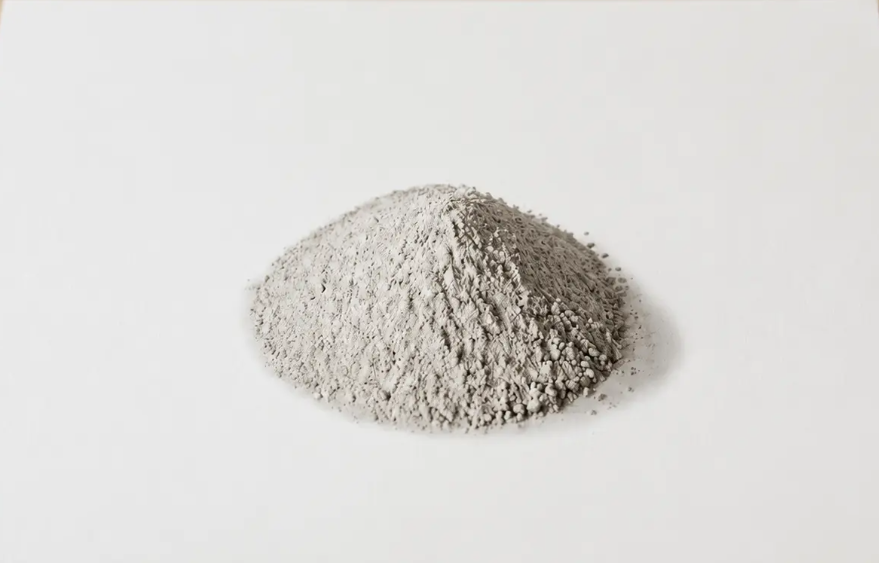
Waste incinerators are important environmental protection equipment that process waste at high temperatures. Under these high-temperature environments, refractory materials are susceptible to corrosion and damage. Therefore, selecting suitable refractory castables is crucial.Commonly used basic refractory castables include high-alumina castables, magnesia-alumina castables, and magnesia-calcium castables. These castables possess good erosion resistance and high-temperature stability, effectively preventing slag erosion and adhesion, and extending the service life of the refractory material.High-alumina castables are commonly used basic refractory materials, primarily composed of alumina and aluminum silicate. They can withstand chemical reactions and mechanical impacts at high temperatures and possess good thermal stability and wear resistance. Magnesia-alumina and magnesia-calcium castables also have similar performance characteristics, but are relatively more expensive.Using basic refractory castables in waste incinerators ensures long-term stable operation of the equipment and effectively reduces the environmental harm caused by solid waste. The selection of refractory materials must be based on specific application conditions.Xinxiang Tianyi Insulation Materials Co., Ltd., a manufacturer of castables, describes its alkaline refractory castables for waste incinerators. They produce non-stick alumina castables, low-cement castables, high-alumina castables, lightweight castables, refractory castables, and wear-resistant castables. Xinxiang Tianyi Insulation Materials has successively developed shaped products such as aluminum silicate series, siliceous series, alkaline series, and lightweight insulating brick series for industries such as coking, building materials, steel, non-ferrous metals, and power, as well as unshaped materials such as castables, self-flowing materials, and plastics.
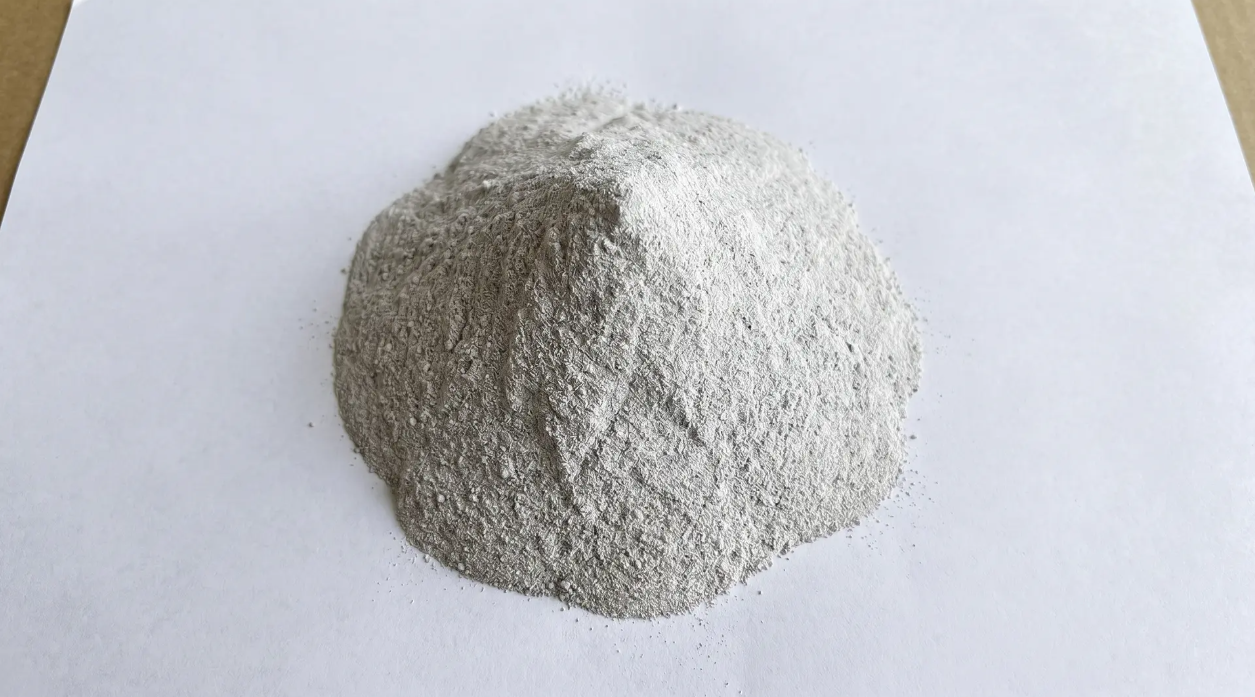
Industrial furnaces are expected to operate continuously under extreme temperatures while maintaining efficiency and minimizing downtime. As operating conditions become more demanding, traditional refractory materials may struggle to meet the requirements of modern high-temperature industries.Corundum self-flow castables have become a preferred solution because they combine excellent installation performance with outstanding mechanical strength and high-temperature stability. Their ability to flow into complex structures without extensive vibration makes them particularly suitable for modern furnace construction and maintenance.What Is a Corundum Self-Flow Castable?A corundum self-flow castable is a high-performance refractory material made primarily from high-purity corundum aggregates and fine powders. With optimized binders and additives, the material develops excellent flowability after mixing with water.Unlike conventional castables, self-flow castables can spread naturally under their own weight, filling narrow gaps and complicated molds with minimal vibration. This helps achieve a dense, uniform lining while reducing installation time.Superior Flowability Improves Installation QualityOne of the greatest advantages of self-flow technology is its ability to reduce common construction defects.Because the material fills every corner of the mold more easily, it minimizes the risk of:Air pocketsHoneycomb structuresIncomplete fillingUneven densityThe result is a more reliable furnace lining with fewer weak points.High Temperature StabilityCorundum is well known for its exceptional refractoriness.Even under prolonged exposure to extremely high temperatures, corundum self-flow castables maintain excellent structural integrity, minimizing deformation and maintaining reliable support for furnace operations.This makes them ideal for demanding thermal environments where long-term stability is essential.Excellent Wear ResistanceIndustrial furnaces often experience severe abrasion from raw materials, molten products, high-speed gas flow, and mechanical impact.Thanks to their dense microstructure and high hardness, corundum self-flow castables offer outstanding resistance to wear, helping extend furnace lining service life while reducing maintenance frequency.Better Resistance to Thermal ShockFrequent heating and cooling cycles generate thermal stress inside refractory linings.A well-designed corundum self-flow castable provides improved resistance to thermal shock, reducing the likelihood of cracking and spalling during repeated temperature fluctuations.This contributes to safer operation and longer maintenance intervals.Typical Industrial ApplicationsCorundum self-flow castables are widely used in many high-temperature industries, including:Steel reheating furnacesLadles and tundishesCement rotary kilnsGlass melting furnacesPetrochemical cracking furnacesIncineratorsPower plant boilersNon-ferrous metal furnacesTheir excellent flowability makes them especially valuable for complicated structures and difficult-to-access installation areas.Proper Installation Maximizes PerformanceMaterial quality is only one part of the equation.To achieve the best performance, operators should:Control the recommended water additionMix thoroughly using appropriate equipmentPour continuously whenever possibleFollow proper curing proceduresCarry out a controlled drying and heating schedule before operationCorrect installation practices help maximize lining density, durability, and service life.ConclusionModern industrial furnaces require refractory materials that combine reliability, durability, and installation efficiency.Corundum self-flow castables offer a unique combination of high flowability, excellent strength, superior wear resistance, and outstanding high-temperature performance. When properly selected and installed, they help reduce maintenance costs, improve operational efficiency, and extend the service life of critical furnace equipment.
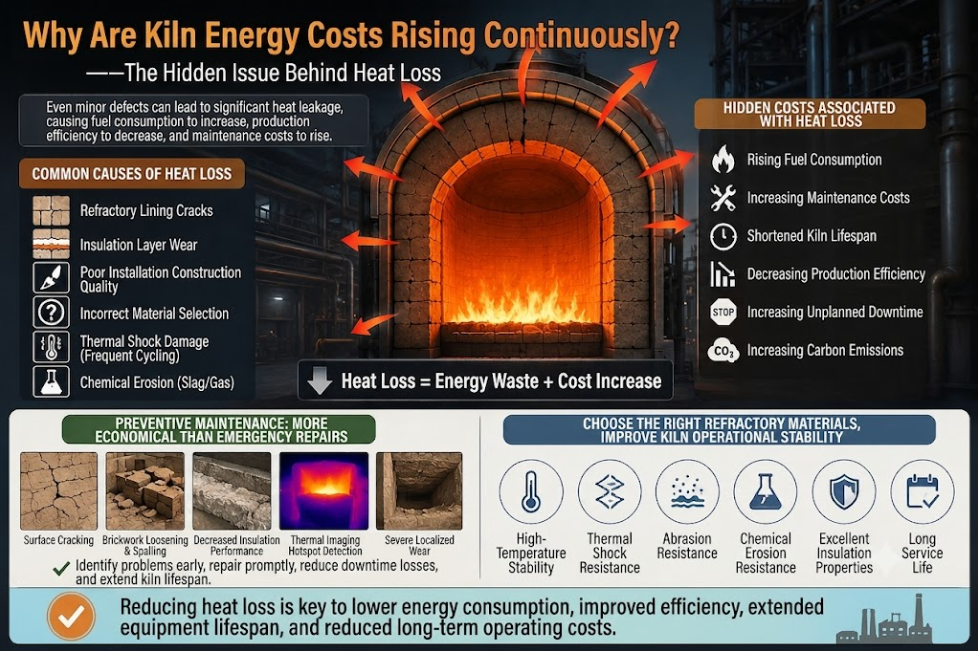
Every Degree of Heat Loss Has a CostIndustrial furnaces are designed to operate efficiently under extreme temperatures. However, many plants focus only on burners, fuel quality, or production speed while overlooking one critical factor—the condition of the furnace lining.Even small defects in refractory materials can allow large amounts of heat to escape, forcing equipment to consume more fuel just to maintain operating temperatures.Over time, this invisible energy loss becomes one of the largest operating expenses for steel plants, glass manufacturers, cement factories, foundries, and ceramic producers.Common Causes of Heat LossSeveral factors contribute to declining furnace efficiency:Cracked refractory liningsWorn insulation layersPoor installation qualityIncorrect material selectionThermal shock damage from repeated heating and coolingChemical corrosion caused by slags or process gasesThese problems rarely appear overnight. They gradually develop until fuel consumption increases and maintenance becomes unavoidable.The Cost Goes Beyond FuelHeat loss affects much more than energy bills.As furnace temperatures become unstable, production quality may fluctuate, equipment components experience greater thermal stress, and unexpected shutdowns become more frequent.The hidden costs often include:Higher natural gas or coal consumptionIncreased maintenance expensesReduced furnace campaign lifeLower production efficiencyMore unplanned downtimeHigher carbon emissionsFor many factories, these indirect losses exceed the actual cost of replacing damaged refractory materials.Prevention Is More Economical Than Emergency RepairsRather than waiting for visible failures, many successful manufacturers perform routine inspections of their furnace linings.Preventive maintenance helps identify:Surface cracksLoose refractory jointsInsulation degradationHot spots detected through thermal imagingAreas exposed to excessive wearEarly repairs are usually faster, less expensive, and far less disruptive than emergency shutdowns.Choosing Materials That Match Operating ConditionsNo single refractory solution fits every furnace.Different industries require materials designed for their own operating environments, including:High-temperature resistanceThermal shock resistanceAbrasion resistanceChemical corrosion resistanceExcellent insulating performanceLong service lifeSelecting the proper material according to operating temperature, atmosphere, and mechanical stress significantly improves furnace reliability.Final ThoughtsImproving furnace efficiency is not always about installing new equipment.Sometimes the greatest opportunity lies in reducing heat loss through better refractory design, proper maintenance, and selecting materials suited to real operating conditions.A well-maintained furnace not only saves energy but also improves production stability, extends equipment life, and reduces long-term operating costs.
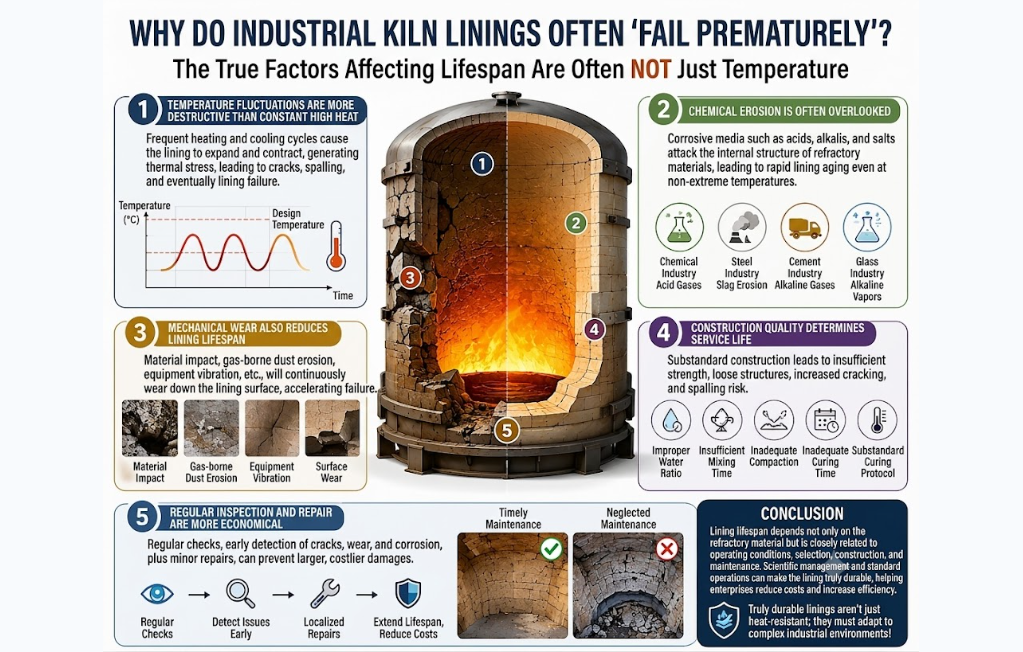
Why Industrial Furnace Linings “Fail Too Early”: The Real Cause Is Often Not TemperatureIn many industrial operations, refractory lining damage is often assumed to be an inevitable result of high temperatures. However, in real production environments, most premature failures are not caused solely by excessive heat. Instead, they result from a combination of multiple factors. Understanding these key mechanisms and applying targeted maintenance strategies can significantly extend lining service life, reduce maintenance costs, and improve overall equipment efficiency.1. Temperature Fluctuation Is More Destructive Than High TemperatureRefractory materials are generally designed to withstand continuous high operating temperatures within a specified range. However, frequent start-ups, shutdowns, or rapid temperature changes cause repeated thermal expansion and contraction.This generates thermal stress inside the lining structure. When the stress exceeds the material’s tolerance, cracks begin to form, eventually leading to spalling or even large-scale structural failure.Therefore, controlling heating and cooling rates and maintaining stable operation is often more important than simply improving high-temperature resistance.2. Chemical Attack Is Often OverlookedDifferent industries produce different corrosive media during operation, such as:Slag corrosion in the steel industryAlkaline gases in cement productionAlkali vapors in glass furnacesAcidic gases in chemical processingCorrosive flue gases in waste incinerationThese chemical agents gradually penetrate and destroy the internal structure of refractory materials. Even at relatively moderate temperatures, severe lining degradation can still occur.For this reason, material selection should always be based on actual working conditions rather than temperature resistance alone.3. Mechanical Wear Also Shortens Service LifeMaterial movement, slag flow, gas-solid erosion, dust-laden airflow, and equipment vibration all continuously wear down the surface of refractory linings.Once the protective layer becomes thinner, heat and corrosive media can penetrate more easily, accelerating overall failure.In high-wear areas, more abrasion-resistant refractory materials should be used, and key zones should be inspected regularly.4. Installation Quality Determines Long-Term PerformanceEven the highest-quality refractory materials will fail prematurely if installation is not properly executed. Common issues include:Incorrect water additionInsufficient mixing timeInadequate vibration during castingPoor curing conditionsImproper dry-out (heat-up) proceduresThese factors significantly weaken structural integrity and increase the risk of cracking and detachment. Therefore, proper construction practices are critical to ensuring long service life.5. Preventive Inspection Is More Cost-Effective Than Emergency RepairsMany plants only shut down for maintenance after severe damage has already occurred. This leads to higher repair costs and production losses.In contrast, implementing a regular inspection system allows early detection of cracks, wear, or localized corrosion. Small-scale repairs can then be carried out before problems escalate.This preventive approach is far more economical and improves operational reliability.ConclusionThe service life of industrial furnace linings depends not only on the refractory material itself but also on operating conditions, material selection, installation quality, and maintenance practices.With proper engineering design, correct construction methods, and routine inspection, lining life can be significantly extended while improving equipment stability and reducing total operating costs.A truly durable furnace lining is not only heat-resistant—but also capable of withstanding complex industrial environments.
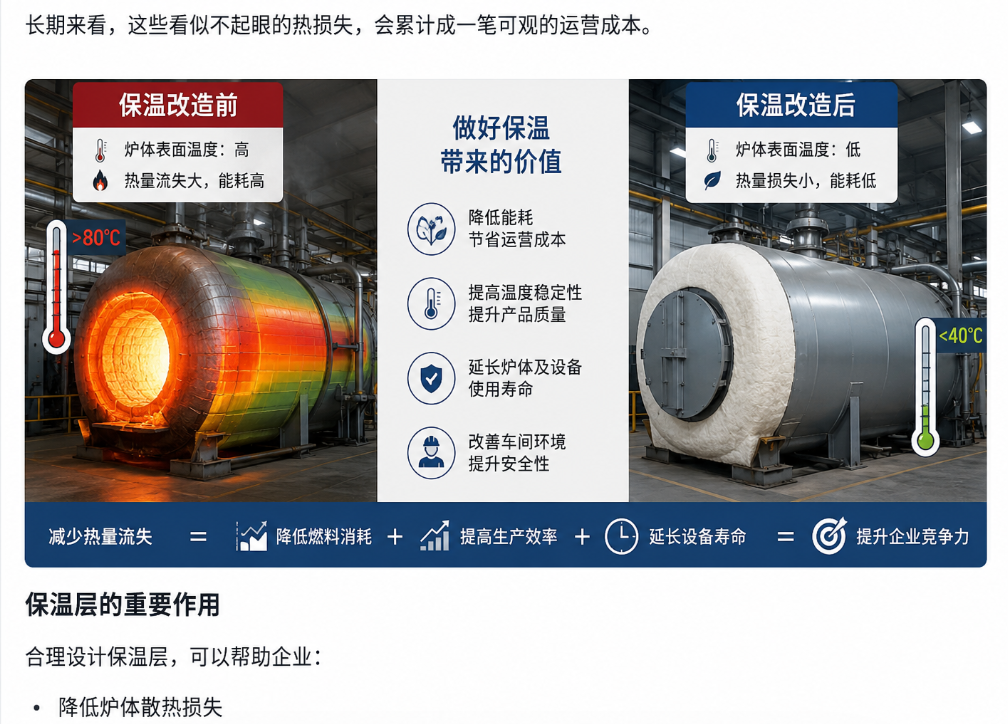
When upgrading industrial furnaces, many companies focus primarily on refractory performance. However, thermal insulation is equally important for improving efficiency and reducing operating costs.A well-designed insulation system helps minimize heat loss, reduce fuel consumption, maintain stable furnace temperatures, and extend equipment service life.Signs that a furnace may need insulation improvement include:High external shell temperaturesIncreased energy consumptionLonger heating timesTemperature fluctuationsReduced lining service lifeInvesting in effective insulation is not just about saving energy—it also improves production stability, lowers maintenance costs, and enhances overall operational efficiency.

Industrial furnaces operate under extremely demanding conditions, including high temperatures, thermal cycling, mechanical stress, and chemical attack. A well-designed refractory lining can significantly extend furnace life, improve energy efficiency, and reduce maintenance costs. However, premature lining failure remains a common challenge across steel, cement, glass, petrochemical, and foundry industries.Understanding the root causes of refractory failure is the first step toward improving operational reliability.1. Improper Material SelectionNot all refractory materials are suitable for every operating environment. Selecting a lining based solely on temperature resistance can lead to rapid deterioration.Factors that should be considered include:Operating temperatureThermal shock resistanceAbrasion resistanceChemical corrosion resistanceMechanical load requirementsFor example, a castable used in a high-wear zone may fail quickly if abrasion resistance is insufficient, even when temperature requirements are met.2. Poor Installation PracticesEven high-quality refractory materials can fail prematurely if installation procedures are not followed correctly.Common installation issues include:Incorrect water addition during mixingInadequate vibration during castingPoor anchoring designUneven lining thicknessImproper joint treatmentStrict adherence to installation guidelines ensures the lining achieves its designed density and strength.3. Insufficient Dry-Out and Heat-Up ProceduresOne of the most frequent causes of refractory damage is improper drying.Residual moisture trapped inside the lining can rapidly convert to steam during heating, creating internal pressure that leads to:CrackingSpallingExplosive failureA controlled dry-out schedule allows moisture to escape safely and helps develop the required mechanical properties of the refractory lining.4. Thermal Shock and Rapid Temperature ChangesFrequent startup and shutdown cycles expose refractories to severe thermal stress.Rapid temperature fluctuations can cause:Surface crackingStructural weakeningLayer separationSelecting refractory materials with excellent thermal shock resistance and implementing controlled heating and cooling procedures can significantly improve service life.5. Chemical Attack and Slag PenetrationChemical corrosion is a major concern in many high-temperature processes.Aggressive substances such as:Molten slagAlkali vaporsSulfur compoundsGlass meltscan penetrate the refractory structure and gradually destroy its integrity.Choosing materials with appropriate chemical resistance and low porosity helps minimize penetration and extend furnace campaign life.ConclusionPremature refractory failure is rarely caused by a single factor. In most cases, material selection, installation quality, dry-out procedures, thermal management, and chemical exposure all play critical roles.By addressing these common issues, industrial operators can improve furnace reliability, reduce downtime, lower maintenance costs, and maximize production efficiency.
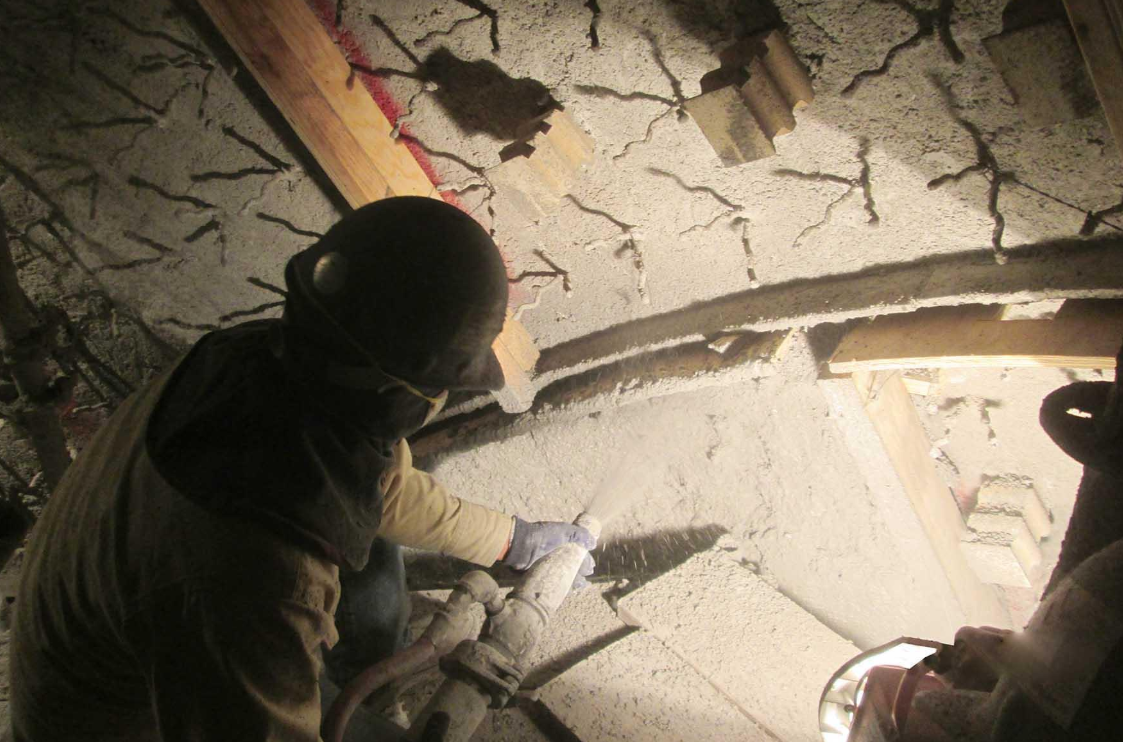
Many industrial facilities face the same question: why do some furnaces operate reliably for years while others experience frequent cracking, excessive heat loss, and costly maintenance?The answer is not simply about operating temperature. Furnace lifespan is influenced by design, operation, maintenance, and overall thermal management.1. Rapid Temperature ChangesIndustrial furnaces are highly sensitive to sudden heating and cooling cycles.When temperatures rise or drop too quickly, thermal stress develops within the furnace structure. Over time, this stress can lead to cracking, deformation, and premature failure.A controlled heating and cooling schedule is essential for long-term reliability.2. Poor Thermal InsulationHeat loss is one of the most common causes of energy waste in industrial operations.Effective insulation helps:Reduce energy consumptionImprove thermal efficiencyLower operating costsMaintain stable internal temperaturesExtend equipment service lifeAs energy prices continue to rise, improving thermal efficiency has become a priority for many manufacturers.3. Continuous OverloadingEvery industrial furnace is designed to operate within specific temperature and production limits.Running equipment beyond its intended capacity may increase short-term output, but it often accelerates wear, increases maintenance costs, and shortens equipment lifespan.Consistent operation within design parameters is usually more economical in the long run.4. Chemical and Environmental AttackHigh-temperature environments often contain dust, corrosive gases, molten materials, and other aggressive substances.Over time, these factors can gradually weaken furnace structures, leading to reduced performance and unexpected downtime.Understanding the operating environment is crucial for maintaining equipment integrity.5. Regular Inspection Makes a DifferenceMany major furnace failures do not occur suddenly. Instead, they develop from small issues that go unnoticed.Routine inspections should focus on:Surface cracksAbnormal wearUneven temperature distributionLocalized overheatingStructural changesEarly detection can significantly reduce repair costs and prevent unplanned shutdowns.6. Energy Efficiency and Equipment Life Are ConnectedEnergy efficiency is often viewed as a cost-saving measure, but it also contributes to equipment longevity.Stable thermal conditions reduce temperature fluctuations and thermal stress, helping industrial furnaces operate more reliably over time.Improving energy management is therefore both a financial and operational advantage.ConclusionThe lifespan of an industrial furnace depends on much more than its operating temperature. Proper design, controlled operation, routine maintenance, and effective thermal management all play critical roles.By focusing on these factors, manufacturers can reduce downtime, improve efficiency, lower operating costs, and achieve longer equipment service life.
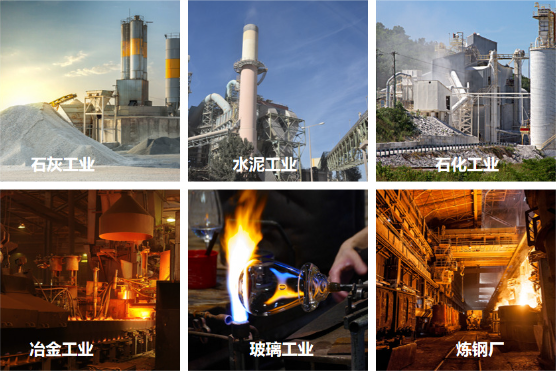
When people think about modern industry, they often focus on steel mills, cement plants, glass factories, or power stations. However, few realize that behind every high-temperature production process lies an essential material that makes these industries possible: refractory materials.Without refractory materials, industrial furnaces would be unable to withstand extreme temperatures, and many manufacturing processes would simply stop.What Are Refractory Materials?Refractory materials are specially engineered materials capable of maintaining their strength, structure, and stability under extremely high temperatures.Unlike ordinary construction materials, refractories can operate continuously in environments ranging from 1000°C to over 1800°C while resisting thermal shock, chemical attack, abrasion, and mechanical stress.Their primary role is to protect industrial equipment and maintain process efficiency.Why High Temperatures MatterMany industrial products require heat-intensive manufacturing processes:Steel requires melting and refining at temperatures above 1600°C.Cement clinker is produced at around 1450°C.Glass melting furnaces operate continuously for years at temperatures exceeding 1500°C.Petrochemical facilities rely on high-temperature reactors and heaters.At these temperatures, conventional materials would rapidly fail, making refractory technology indispensable.The Hidden Infrastructure of IndustryRefractory materials are often called the "invisible foundation" of industrial production.While they are rarely seen by end users, they line the interior of:Blast furnacesRotary kilnsGlass furnacesIncineratorsBoilersLadlesHeat treatment furnacesThese systems cannot function safely or efficiently without reliable refractory linings.How Refractory Technology Has EvolvedHistorically, refractory materials were relatively simple clay-based products.Today, advances in material science have transformed the industry through:High-purity raw materialsAdvanced manufacturing processesComputer-aided furnace designImproved thermal efficiency technologiesEnvironmentally sustainable production methodsModern refractory solutions now contribute not only to equipment protection but also to energy conservation and carbon reduction.The Connection Between Refractories and SustainabilityIndustrial sectors worldwide face increasing pressure to reduce emissions and improve energy efficiency.A well-designed refractory system can:Reduce heat lossLower fuel consumptionImprove production efficiencyExtend equipment lifespanMinimize maintenance shutdownsAs global industries pursue carbon neutrality goals, refractory engineering has become a key component of sustainable manufacturing.Future Trends in the Refractory IndustrySeveral trends are shaping the future of refractory technology:1. Energy-Efficient Furnace DesignManufacturers are demanding materials that help reduce thermal losses and improve heat utilization.2. Longer Service LifePlants seek refractory solutions that minimize downtime and maintenance costs.3. Smart ManufacturingDigital monitoring and predictive maintenance are becoming increasingly important in furnace operations.4. Green ManufacturingThe development of low-carbon raw materials and environmentally friendly production processes is accelerating worldwide.ConclusionAlthough rarely noticed outside industrial circles, refractory materials play a fundamental role in modern manufacturing. From steel production to glass making, these high-temperature materials enable industries to operate safely, efficiently, and sustainably.As industrial technology continues to evolve, refractory materials will remain one of the most important foundations supporting global manufacturing and infrastructure development.
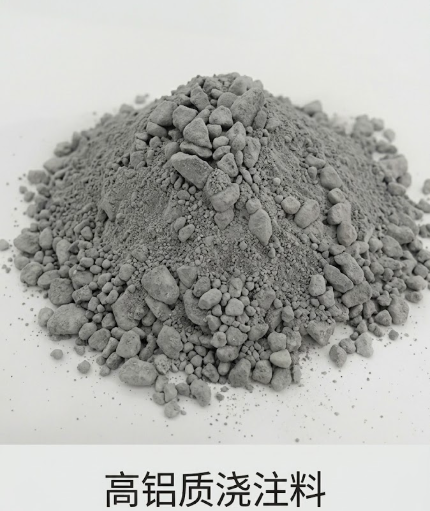
High alumina castable is a high-quality monolithic refractory material made primarily from high alumina bauxite. It offers excellent high-temperature resistance, thermal shock resistance, and chemical corrosion resistance.In industrial kiln operations, linings are exposed to extreme temperatures, mechanical wear, and chemical attack. Conventional materials often fail due to cracking or spalling. High alumina castable significantly improves lining stability through optimized aggregate grading and binder systems. Key Advantages:Excellent high-temperature performance for long-term operationStrong thermal shock resistance, reducing cracking riskHigh resistance to slag and chemical corrosionEasy installation by casting, suitable for complex structures Applications:Steelmaking furnacesCement rotary kilnsGlass furnacesPetrochemical heatersIndustrial heat treatment equipmentWith increasing demand for energy efficiency and longer service life, high alumina castable has become a key material for modern industrial kiln upgrading and performance improvement.
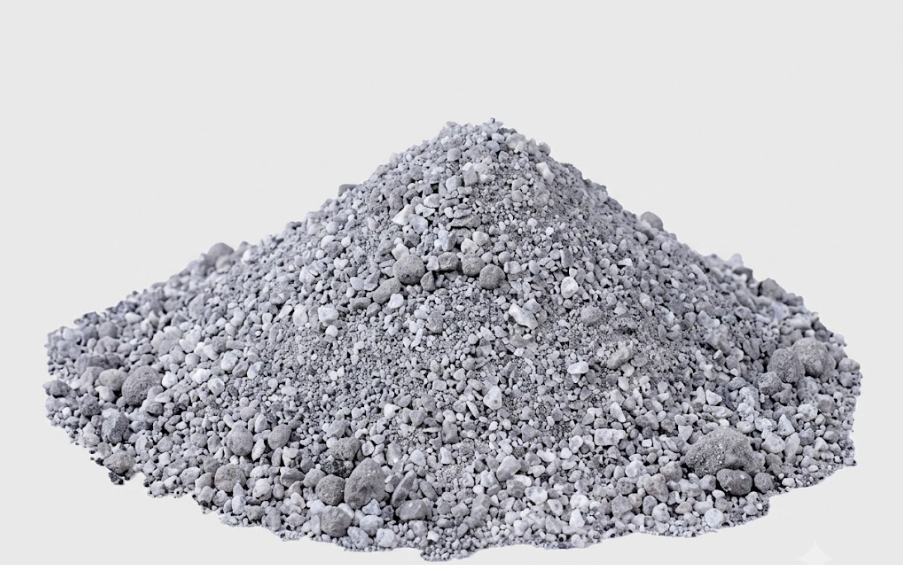
What is Anti-Seepage Castable?Anti-Seepage Castable is a high-performance refractory material specially designed to prevent the penetration of molten metal, slag, alkali substances, and other corrosive media into furnace linings. By optimizing particle grading, reducing porosity, and incorporating special anti-penetration additives, it forms a dense and durable protective layer under high-temperature conditions.It is widely used in blast furnaces, iron runners, steel ladles, reheating furnaces, waste incinerators, cement kilns, and various industrial furnaces where resistance to slag and molten metal infiltration is critical.Key Features of Anti-Seepage Castable1. Excellent Anti-Penetration PerformanceIts dense microstructure effectively blocks the infiltration of molten iron, slag, alkali vapors, and corrosive liquids, reducing internal erosion.2. High Temperature ResistanceCapable of operating under temperatures exceeding 1,500°C while maintaining structural stability and strength.3. Superior Corrosion ResistanceProvides excellent protection against chemical attack from slag, molten metal, and alkaline substances.4. High Mechanical StrengthOffers excellent cold crushing strength and hot strength, ensuring long service life under severe operating conditions.5. Reduced Maintenance CostsBy minimizing penetration damage and lining deterioration, anti-seepage castables help extend furnace campaign life and reduce shutdown frequency.Typical ApplicationsBlast Furnace TapholesIron and Steel LadlesTundishesHot Metal Transfer ChannelsCement Kiln Transition ZonesWaste IncineratorsPetrochemical FurnacesGlass FurnacesNon-Ferrous Metal Smelting FurnacesWhy Molten Material Penetration MattersWhen molten slag or metal penetrates ordinary refractory linings, it can:❌ Cause structural cracking❌ Accelerate chemical erosion❌ Reduce thermal insulation performance❌ Increase heat loss❌ Lead to premature furnace failureAnti-Seepage Castables are specifically engineered to eliminate these risks and maintain furnace integrity under demanding conditions.Benefits for Industrial Plants✔ Extended furnace service life✔ Reduced refractory consumption✔ Lower maintenance costs✔ Improved operational safety✔ Increased production efficiency✔ Reduced unplanned downtimeWhy Choose Tianyi Anti-Seepage Castable?At Tianyi Refractory Materials, we manufacture high-quality anti-seepage castables tailored for steel, cement, metallurgy, petrochemical, and glass industries.Our products provide:Excellent anti-slag penetration resistanceHigh density and low porosityStable performance at elevated temperaturesCustomized formulations for different furnace conditionsProfessional technical support and installation guidance
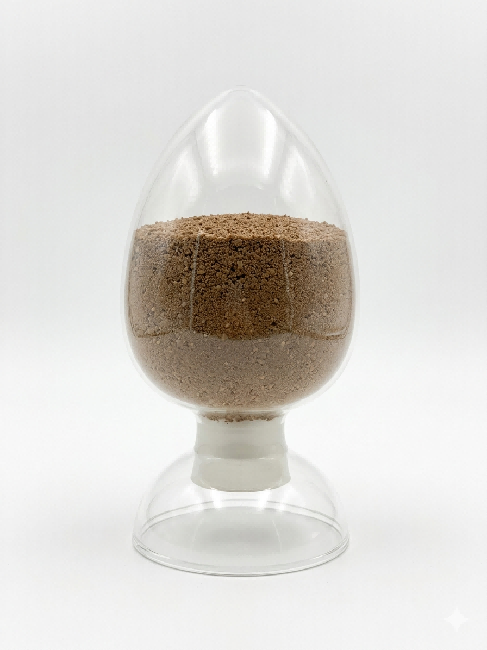
What Is Silica Refractory Plastic?Silica Refractory Plastic is an unshaped refractory material made from high-purity silica aggregate, refractory binders, and special additives. It is supplied in a plastic state and can be installed by ramming, making it ideal for furnace linings, repairs, and maintenance projects.Due to its excellent refractoriness, strong adhesion, and easy installation, silica refractory plastic is widely used in coke ovens, glass furnaces, hot blast stoves, soaking pits, and various industrial kilns operating under high-temperature conditions.Key Features and BenefitsExcellent High-Temperature ResistanceSilica refractory plastic contains a high percentage of SiO₂, enabling it to withstand temperatures above 1500°C while maintaining structural stability and strength.Outstanding Thermal Shock ResistanceThe material can tolerate repeated heating and cooling cycles, reducing the risk of cracking, spalling, and premature lining failure.Easy InstallationUnlike traditional refractory bricks, silica refractory plastic can be directly rammed into place, significantly reducing installation time and labor costs.Strong Sealing PerformanceIts monolithic construction minimizes joints and gaps, preventing heat loss and improving furnace thermal efficiency.Long Service LifeThe material offers excellent resistance to wear, thermal stress, and high-temperature deformation, helping extend furnace campaign life and reduce maintenance frequency.Typical ApplicationsGlass IndustryUsed in glass melting furnaces, regenerators, and other high-temperature sections requiring reliable refractory performance.Coke OvensSuitable for oven roofs, walls, doors, and hot repair applications where durability and thermal stability are critical.Steel IndustryApplied in hot blast stoves, reheating furnaces, soaking pits, and various furnace maintenance projects.Cement and Lime IndustryIdeal for localized repairs and refractory lining construction in cement kilns and lime kilns.Why Choose Silica Refractory Plastic?Modern industrial furnaces demand refractory materials that combine durability, energy efficiency, and ease of installation. Silica refractory plastic offers a monolithic lining solution that reduces heat loss, minimizes downtime, and improves overall furnace performance.By selecting high-quality silica refractory plastic, plant operators can lower maintenance costs, increase operational efficiency, and achieve longer service intervals.Tianyi Refractory MaterialsXinxiang Tianyi Refractory Materials Co., Ltd. specializes in the production and export of refractory castables, refractory plastics, refractory bricks, insulation materials, and high-temperature coatings.We provide customized refractory solutions for industries including:Steel & MetallurgyGlass ManufacturingCement ProductionPetrochemical PlantsPower GenerationIndustrial Kilns & Furnaces