咨询热线:18906399575

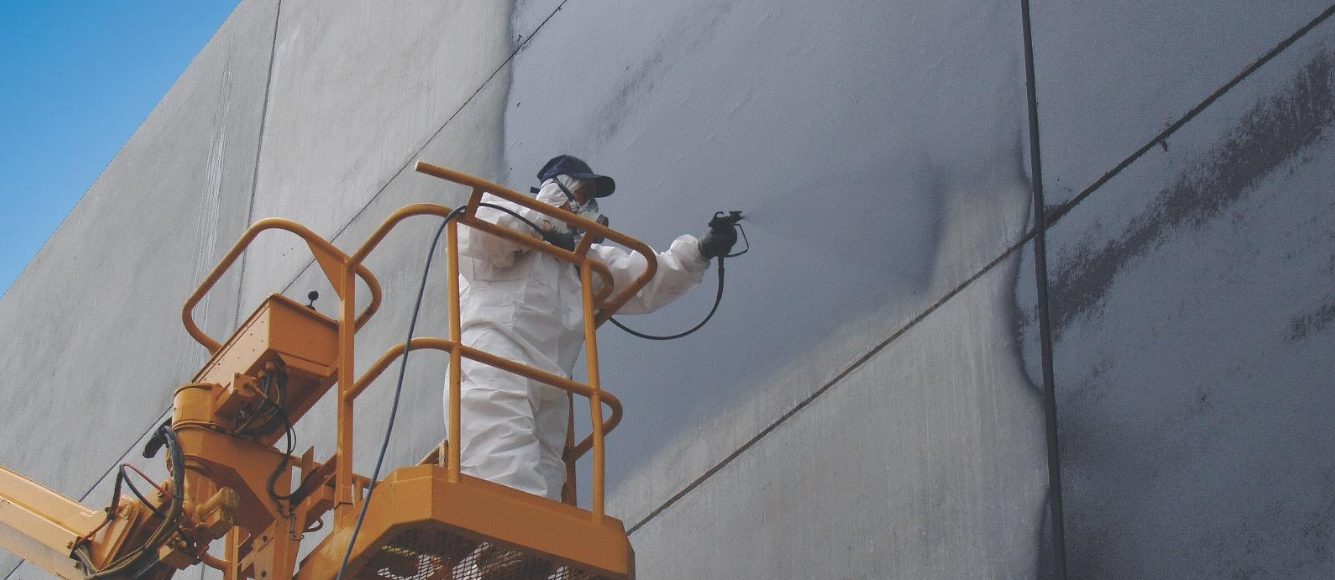
In industrial environments characterized by high temperature, high humidity, and severe acid and alkali corrosion, ordinary protective materials often suffer from aging, cracking, leakage, and decreased durability. This is especially true in steel mills, cement plants, chemical equipment, industrial kilns, and underground engineering projects, where long-term exposure to temperature fluctuations and chemical corrosion renders traditional protective solutions inadequate for the long-term stable operation requirements of modern industry.FS-2F180 special anti-aging and corrosion inhibitor and FS-2F special waterproofing agent are high-performance protective materials developed specifically to address these industrial challenges. They effectively improve the corrosion resistance, waterproofing, and long service life of equipment and structures, and are widely used in the protection of industrial furnaces, flues, cooling towers, underground engineering projects, and high-temperature equipment.Why industrial projects need advanced protective materialsMany industrial enterprises encounter the following problems after construction:·Cracks in the waterproofing layer leading to water seepage·Rapid aging of materials under high temperatures·Acid and alkali corrosion causing equipment damage·Frequent repairs increasing downtime costs·Insufficient weather resistance of ordinary materialsFS-2F180 Special Anti-Aging Corrosion Inhibitor uses a special composite formula to form a stable protective layer under high temperatures and complex environments, significantly reducing the aging rate of materials. At the same time, FS-2F Waterproofing Agent effectively prevents moisture penetration, improving the overall sealing performance of the structure.Key advantages of FS-2F180 anti-aging and corrosion inhibitorExcellent Corrosion Resistance: FS-2F180 resists corrosion from acidic gases, humid environments, and chemical media, making it suitable for harsh industrial conditions.High-Temperature Stability: Maintains stable performance even at high temperatures, making it ideal for industrial furnaces, high-temperature flues, and thermal equipment.Long Service Life: Reduces material aging and decreases the frequency of maintenance, helping companies save on repair costs.Improved Surface Protection: Forms a high-strength protective layer, improving the stability of the substrate structure.Advantages of FS-2F Special Waterproofing Agent: FS-2F waterproofing agent has excellent penetration properties, reaching deep into materials to form a waterproof barrier.Its main advantages include:·Strong leak-proof performance·Improved structural durability·Easy construction·Compatible with a variety of refractory materials·Suitable for underground and high-humidity environmentsIn industrial kilns, underground pipelines, cement projects, and chemical equipment, FS-2F Waterproofing Agent can effectively extend service life and reduce maintenance risks.Industrial ApplicationsThe FS-2F180 and FS-2F series products are widely used in:·Steel plants·Cement kilns·Glass furnaces·Chemical plants·Industrial pipelines·Underground engineering·Cooling towersThermal equipmentThese products not only improve the operational stability of industrial equipment but also reduce downtime for maintenance and increase overall production efficiency.inconclusionAs industrial environmental requirements continue to increase, traditional corrosion and waterproofing solutions are no longer sufficient to meet the demands of long-term stable operation. FS-2F180 Special Anti-Aging Corrosion Inhibitor and FS-2F Waterproofing Agent offer superior corrosion resistance, aging resistance, and waterproofing properties, providing a more reliable protection solution for industrial equipment and engineering structures.For companies seeking to reduce maintenance costs, extend equipment lifespan, and improve production stability, these high-performance industrial protective materials are becoming an increasingly important choice.
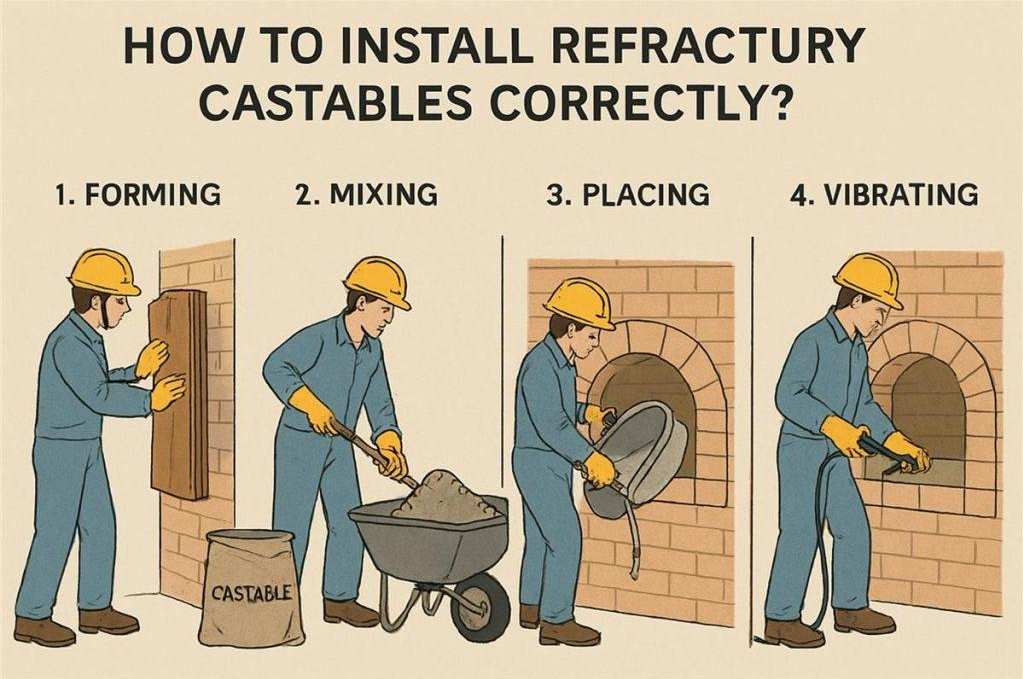
Industrial furnaces operate under extreme temperatures and continuous production pressure. Once the lining begins to crack, peel, or wear out, factories face unexpected shutdowns, energy loss, and expensive maintenance costs. This is where hot repair refractory castable becomes an essential solution for modern furnace maintenance.What Is Hot Repair Refractory Castable?Hot repair refractory castable is a specially formulated high temperature refractory material designed for repairing industrial furnaces without long shutdown periods. Unlike traditional refractory repair methods that require complete cooling, hot repair technology allows maintenance work under elevated temperatures, greatly improving production efficiency.This material is widely used in:Steel furnacesCement rotary kilnsGlass furnacesPetrochemical heating furnacesIncineratorsPower plant boilersBecause of its excellent thermal shock resistance and strong bonding performance, refractory castable can quickly restore damaged furnace linings and extend equipment service life.Why Furnace Operators Choose Hot Repair Refractory CastableOne of the biggest pain points in industrial production is unplanned downtime. Every hour a furnace stops may lead to huge production losses. Traditional refractory replacement often requires cooling, demolition, rebuilding, and reheating, which consumes both time and fuel.Using hot repair refractory castable helps solve several major problems:1. Reduce Furnace DowntimeFactories can perform localized repairs while maintaining operational temperatures. This significantly shortens maintenance schedules and improves production continuity.2. Lower Energy ConsumptionRepeated cooling and reheating cycles waste large amounts of fuel. Hot repair technology minimizes thermal loss and supports energy-saving furnace operation.3. Improve Furnace SafetyDamaged refractory linings may cause heat leakage, structural instability, or even equipment accidents. Applying high temperature refractory castable quickly restores insulation and protects furnace shells.4. Extend Furnace Service LifeRegular hot maintenance prevents small cracks from becoming major structural failures. This helps companies reduce long-term maintenance costs.Key Features of High Temperature Refractory CastableModern furnace lining materials must withstand harsh industrial conditions. High-quality hot repair castables usually offer:Excellent thermal shock resistanceStrong adhesion under high temperaturesFast setting and curing performanceHigh mechanical strengthResistance to slag and chemical corrosionLong service life in continuous operationThese properties make refractory repair faster and more reliable for heavy industrial applications.Applications in Different IndustriesSteel IndustrySteel plants often use refractory supplier solutions for ladles, tundishes, reheating furnaces, and electric arc furnaces. Hot repair materials help reduce interruption during steel production cycles.Cement IndustryRotary kilns operate continuously under severe thermal stress. Hot repair castables help repair worn kiln linings and reduce shutdown risks.Glass IndustryGlass furnaces require stable thermal insulation to maintain product quality. Quick refractory maintenance helps avoid heat loss and uneven melting temperatures.How to Choose the Right Refractory SupplierChoosing a professional refractory supplier is critical for furnace performance. Buyers should focus on:Product quality certificationHigh temperature testing standardsIndustry application experienceTechnical support capabilityStable raw material supplyReliable suppliers can also customize refractory castable formulas according to furnace operating conditions.ConclusionAs industrial production demands higher efficiency and lower operating costs, hot repair refractory castable has become an important solution for furnace maintenance. It helps manufacturers reduce downtime, save energy, improve furnace safety, and extend equipment lifespan.For industries requiring reliable furnace lining material, investing in quality high temperature refractory castable and working with an experienced refractory supplier can greatly improve long-term production stability and maintenance efficiency.
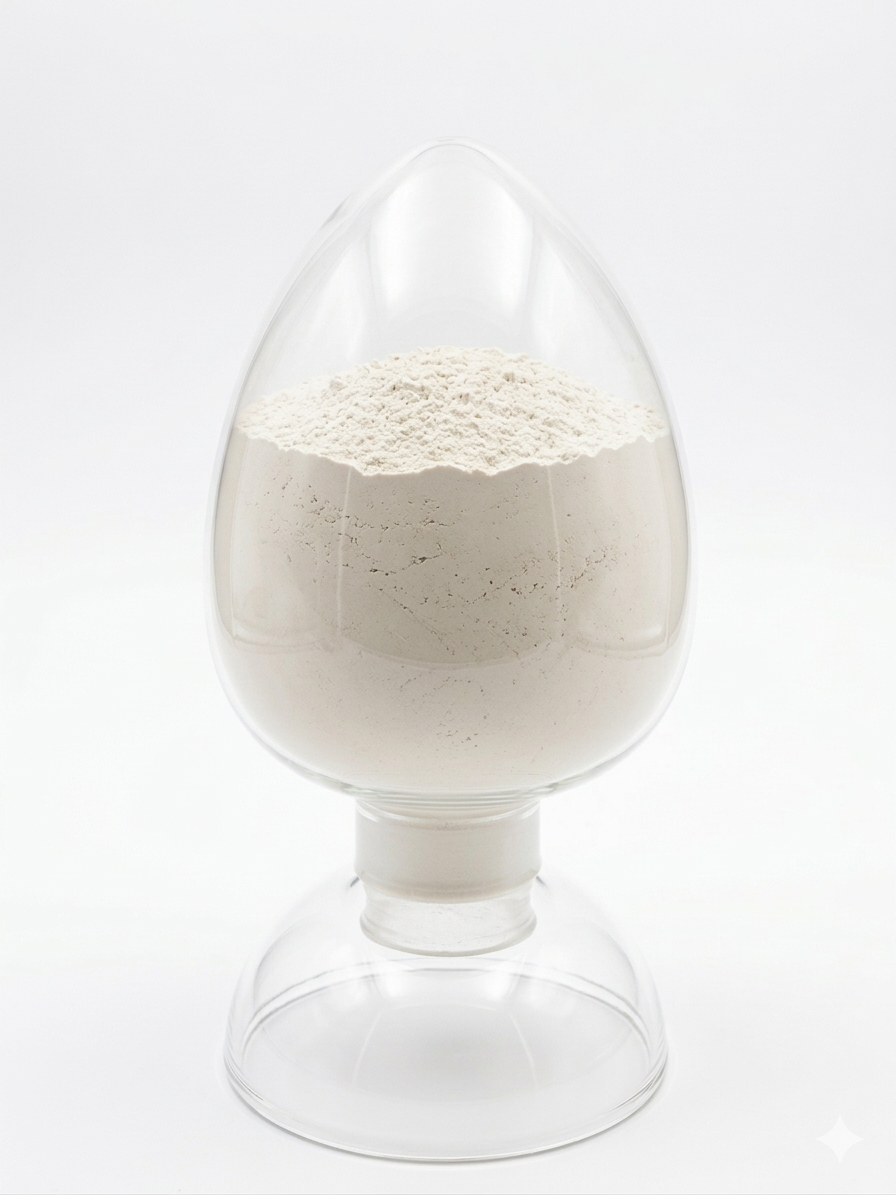
1. What Is Hot Repair Refractory Castable?Hot repair refractory castable is a specialized refractory material designed for repairing damaged furnace linings without fully shutting down the equipment.It allows maintenance to be carried out under high-temperature conditions, making it an essential solution for industries where continuous production is required.This material is widely used in emergency furnace repair and localized lining restoration.2. Key Features of Refractory Repair CastableRefractory repair castable offers several critical advantages:Can be applied under high-temperature conditionsStrong adhesion to existing refractory liningRapid setting and hardeningExcellent thermal shock resistanceExtends furnace service lifeIt is specifically designed for on-site emergency maintenance scenarios.3. Applications of Furnace Repair Refractory MaterialFurnace repair refractory material is widely used in:Steel and iron furnacesCement rotary kilnsGlass melting furnacesPetrochemical reactorsIndustrial boilersIt is especially important in industries where downtime must be minimized.4. Why Hot Repair Technology Is Important?Traditional furnace repair requires full shutdown, which leads to:High production lossLong downtimeIncreased maintenance costWith hot repair refractory castable, companies can:Repair without stopping productionReduce operational downtimeSave significant maintenance costImprove furnace lifespanThis makes it a critical solution in modern industrial production.5. How to Choose the Right Refractory Repair Material?When selecting a refractory repair castable supplier, consider:Maximum working temperatureAdhesion strength under hot conditionsSetting time and curing behaviorCompatibility with existing liningApplication method (trowel, gunning, casting)A reliable supplier can help optimize repair performance and reduce furnace risk.If you are looking for a reliable hot repair refractory castable supplier, we provide professional solutions for furnace maintenance, emergency repair, and high-temperature industrial applications. Contact us for technical support and customized material recommendations.
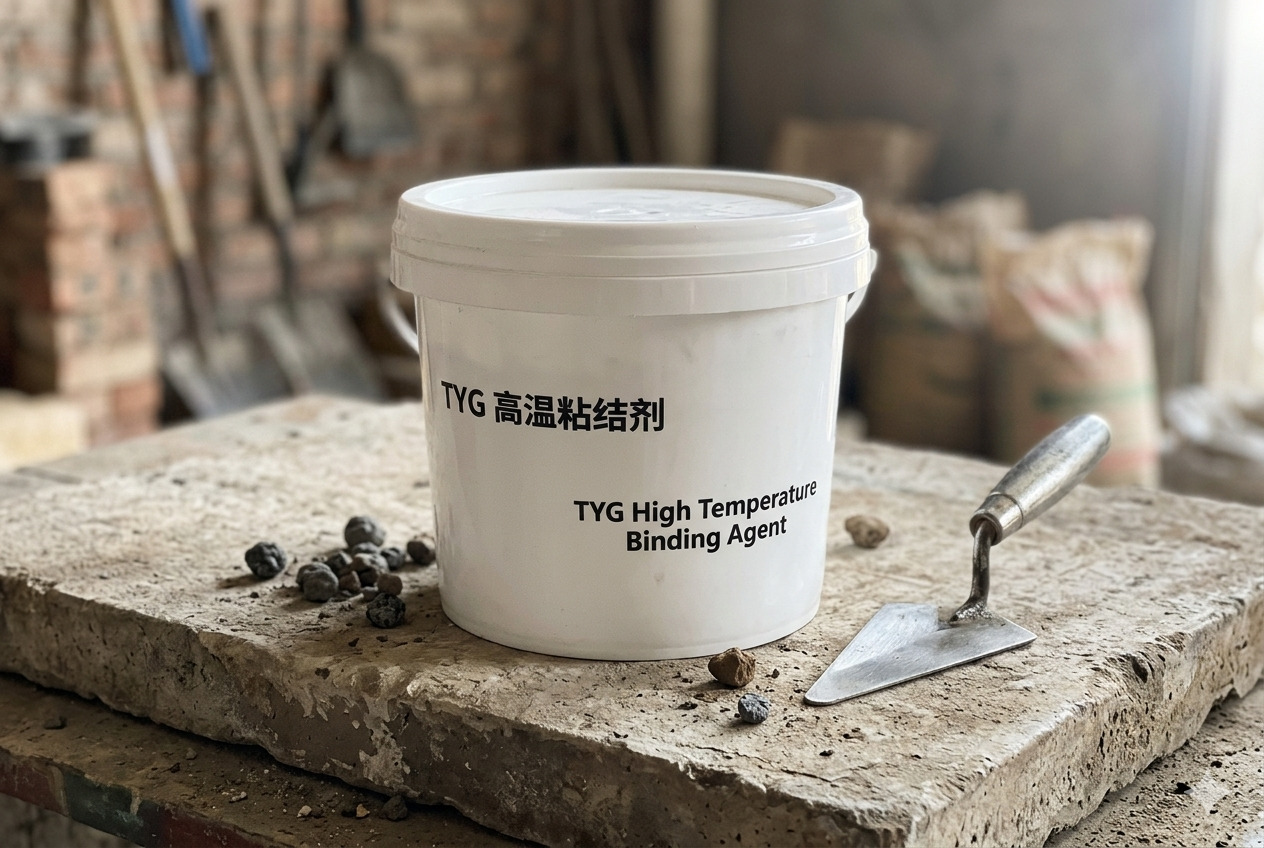
TYG high temperature binder is an essential material widely used in modern refractory systems, especially in the production and installation of high-performance refractory castables, refractory coatings, and furnace lining materials. With the continuous development of high-temperature industries such as steel, cement, glass, and petrochemical engineering, the demand for stable and efficient refractory bonding systems has increased significantly.A high temperature binder is responsible for holding refractory aggregates and powders together, ensuring structural strength, thermal stability, and resistance to chemical attack under extreme conditions. TYG binder is designed to maintain strong bonding performance even under temperatures exceeding 1400°C–1800°C, making it suitable for demanding industrial furnace environments.One of the key advantages of TYG high temperature binder is its excellent adhesion strength. It improves the bonding between refractory aggregates, reduces material loss during high-temperature operation, and significantly enhances the overall structural integrity of furnace linings. Compared with traditional binders, TYG binder provides better thermal shock resistance and longer service life.In addition, TYG binder offers outstanding chemical stability. In industrial furnaces, materials are often exposed to slag, molten metal, and corrosive gases. A high-quality refractory binder ensures that the lining structure remains stable and does not easily degrade or crack under chemical erosion.This product is widely used in refractory castables, refractory mortar, gunning mix, and insulation refractory coatings. It is especially suitable for applications such as ladles, tundishes, rotary kilns, blast furnaces, and ceramic kilns.Another important benefit of TYG binder is improved workability. It allows easier mixing, better flow performance, and more uniform distribution of refractory particles. This helps construction teams achieve consistent lining quality and reduces installation defects.As industries continue to focus on energy efficiency and equipment durability, high-performance refractory binders like TYG are becoming critical materials in modern furnace engineering. They not only improve structural strength but also help reduce maintenance frequency and overall operational costs.In summary, TYG high temperature binder plays a vital role in enhancing the performance of refractory systems. With strong adhesion, excellent thermal resistance, and wide industrial applicability, it is an ideal choice for companies seeking reliable furnace lining solutions and long-term operational stability.
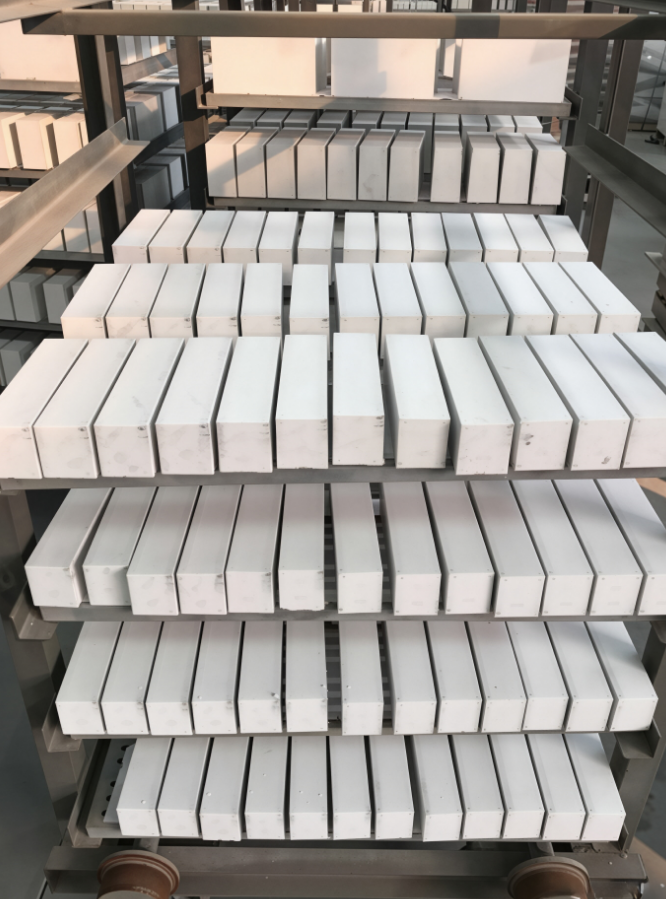
In modern high-temperature industries, reducing energy consumption while maintaining stable furnace performance has become a key goal for manufacturers. From steel plants and ceramic factories to glass furnaces and cement kilns, thermal efficiency directly affects production costs and equipment lifespan. One of the most important materials helping industries achieve this balance is the lightweight insulating fire brick.Lightweight insulating fire bricks are widely used as thermal insulation materials in industrial furnaces because of their low thermal conductivity, high temperature resistance, and energy-saving performance. Compared with traditional dense refractory bricks, insulating fire bricks significantly reduce heat loss inside the furnace lining system. This allows industrial equipment to maintain stable temperatures with lower fuel consumption.A major advantage of lightweight insulating fire bricks is their excellent thermal insulation capability. Their internal porous structure helps block heat transfer, keeping more thermal energy inside the furnace chamber. In industries where furnaces operate continuously at temperatures above 1000°C, even small improvements in insulation efficiency can lead to significant energy savings over time.Another important benefit is the reduction of furnace shell temperature. By using high-quality refractory insulation materials, the external temperature of industrial equipment becomes lower and safer for workers. This not only improves workplace safety but also protects the steel structure of the furnace from overheating and deformation.In addition to energy efficiency, lightweight insulating fire bricks can also help extend furnace service life. Stable insulation reduces thermal shock and minimizes internal temperature fluctuations, which are common causes of refractory damage. As a result, maintenance frequency decreases and production downtime is reduced, improving overall operational efficiency for factories.Different industries require different grades of insulating refractory materials. For example, ceramic tunnel kilns often use lightweight mullite insulation bricks because of their excellent thermal stability, while steel ladles and industrial boilers may require higher strength refractory insulation products. Selecting the correct refractory supplier and matching the right material to the furnace environment is critical for long-term performance.With the growing global focus on carbon reduction and industrial energy optimization, the demand for energy-saving refractory materials continues to increase. More manufacturers are upgrading traditional furnace linings to lightweight refractory systems in order to reduce operating costs and improve thermal efficiency.For refractory material suppliers, this trend also creates new opportunities in international markets. Countries with expanding steel, glass, and non-ferrous metal industries are actively seeking reliable refractory insulation solutions. High-quality lightweight insulating fire bricks are becoming an important product category in the global refractory market.When choosing insulating fire bricks, factories should consider several factors, including operating temperature, bulk density, thermal conductivity, compressive strength, and installation environment. A professional refractory supplier can provide customized solutions based on the specific furnace structure and working conditions.In conclusion, lightweight insulating fire bricks play a critical role in modern industrial furnace systems. Their ability to reduce heat loss, save energy, improve safety, and extend furnace lifespan makes them one of the most valuable refractory insulation materials in high-temperature industries today. As industrial energy standards continue to rise, the application of lightweight refractory products will become even more important in the future.
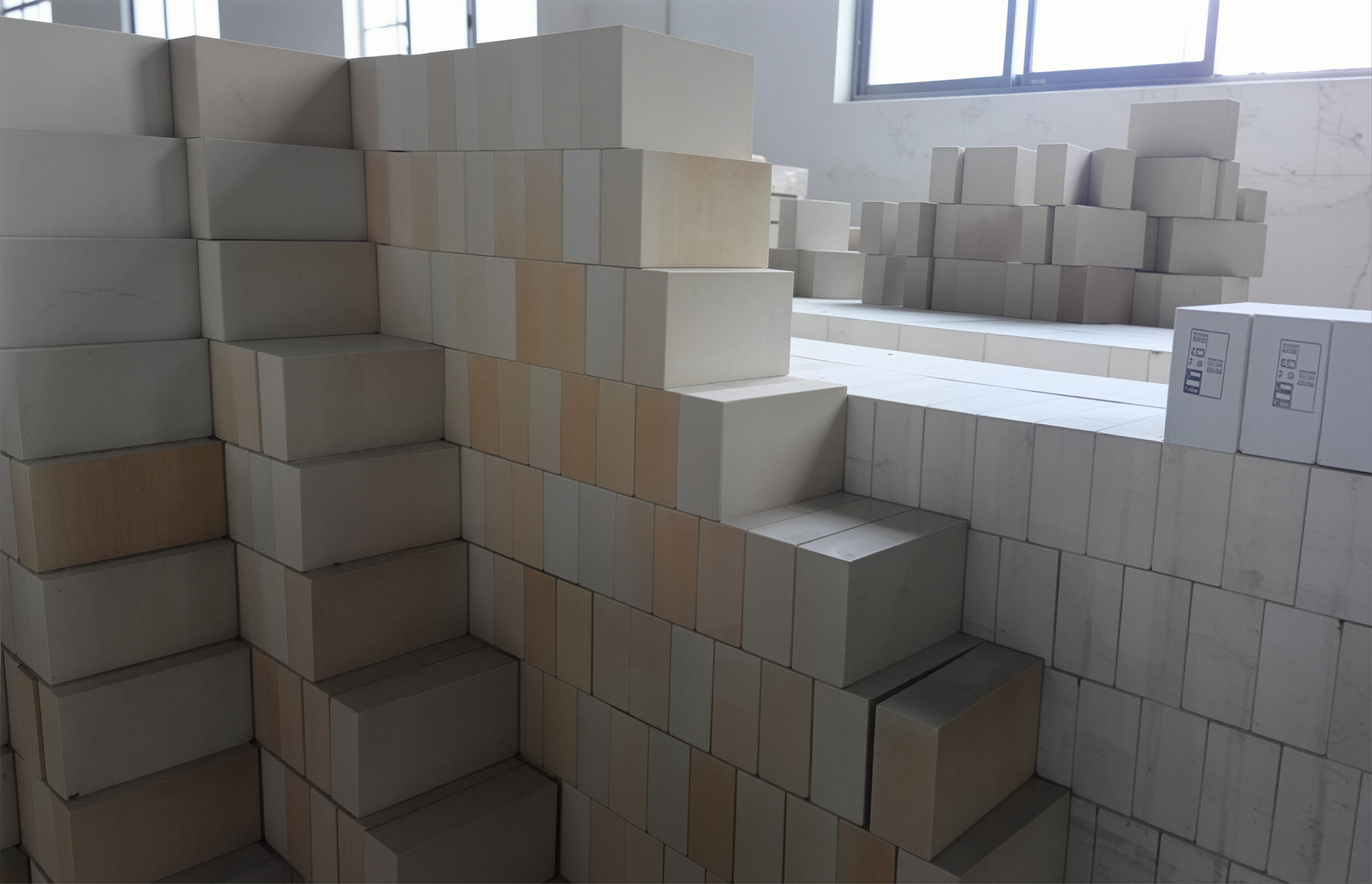
In modern high-temperature industries such as steelmaking, cement production, glass manufacturing, and petrochemical processing, energy efficiency and heat loss control have become critical factors affecting production cost and long-term equipment performance. Industrial furnaces operating under extreme temperatures, often ranging from 1000°C to over 1700°C, require refractory systems that not only withstand thermal stress but also significantly reduce energy consumption. In this context, lightweight high-alumina insulating bricks have become an increasingly important material in furnace lining design and energy-saving optimization.Traditional dense refractory bricks are widely used due to their excellent mechanical strength and high-temperature resistance. However, their relatively high thermal conductivity often leads to significant heat loss through furnace walls. As global energy costs continue to rise and environmental regulations become stricter, industries are shifting toward multi-layer refractory lining structures that combine working layers, safety layers, and insulation layers. Among these, the insulation layer plays a decisive role in improving overall furnace efficiency, and lightweight high-alumina insulating bricks are widely applied in this function.Lightweight high-alumina insulating bricks are produced using high-purity alumina raw materials combined with controlled pore-forming technology. Their internal structure contains uniformly distributed pores, which significantly reduce heat transfer while maintaining sufficient structural stability for insulation applications. Typically, these bricks contain Al₂O₃ content ranging from 40% to 75%, with bulk density between 0.6 and 1.2 g/cm³, and can operate under temperatures from 1200°C to 1400°C depending on the grade. Compared with conventional dense bricks, their main design focus is thermal insulation performance rather than load-bearing capacity, making them ideal for backup and insulation zones in furnace systems.One of the most significant advantages of lightweight high-alumina insulating bricks is their excellent thermal insulation performance. The porous internal structure effectively blocks heat conduction, reducing furnace wall surface temperature and minimizing energy loss during continuous operation. This directly contributes to lower fuel consumption and improved thermal efficiency, especially in large-scale industrial production systems where even small improvements in insulation performance can generate substantial long-term cost savings.In addition to energy-saving benefits, these bricks also offer lightweight properties that simplify installation and reduce the overall load on furnace structures. This makes construction and maintenance more efficient, particularly in complex furnace designs where handling and fitting traditional dense bricks can be challenging. Furthermore, despite their lightweight nature, these bricks still maintain stable performance under high-temperature conditions and are suitable for use in non-direct flame zones as insulation layers.From an application perspective, lightweight high-alumina insulating bricks are widely used in steel ladle backing insulation, blast furnace insulation systems, cement rotary kiln thermal zones, glass furnace regenerator walls, industrial heating furnaces, and petrochemical high-temperature equipment. In most cases, they are used as part of a composite lining system together with high-alumina bricks, refractory castables, or other dense refractory materials, forming a complete thermal protection structure that balances strength and energy efficiency.With the continuous development of industrial technology and the increasing focus on carbon reduction and sustainable manufacturing, the refractory industry is also undergoing transformation. Modern furnace design is no longer based on single-layer refractory structures but instead adopts optimized composite systems that improve both durability and thermal performance. Lightweight insulating materials play a key role in this transition, as they significantly reduce heat loss and improve overall energy utilization efficiency.Looking forward, the development of lightweight high-alumina insulating bricks will continue toward lower thermal conductivity, higher temperature resistance, improved mechanical strength, and more environmentally friendly production processes. The integration of advanced material technologies, such as nano-enhancement and improved pore control techniques, is expected to further enhance their performance and expand their application scope in high-temperature industries.We provide a full range of lightweight high-alumina insulating bricks with stable quality and customizable specifications to meet different industrial furnace requirements. Products can be tailored based on alumina content, density, size, and working conditions to ensure optimal performance in specific applications. In addition to material supply, we also offer technical support including furnace lining design recommendations, insulation system optimization, and application guidance to help customers achieve better energy-saving results.If you are involved in furnace construction, refractory material procurement, or energy-saving renovation projects, we welcome you to contact us with your technical requirements. Our team can provide suitable material solutions based on your working temperature, furnace structure, and application environment, helping you improve furnace efficiency, reduce operating costs, and extend equipment service life.
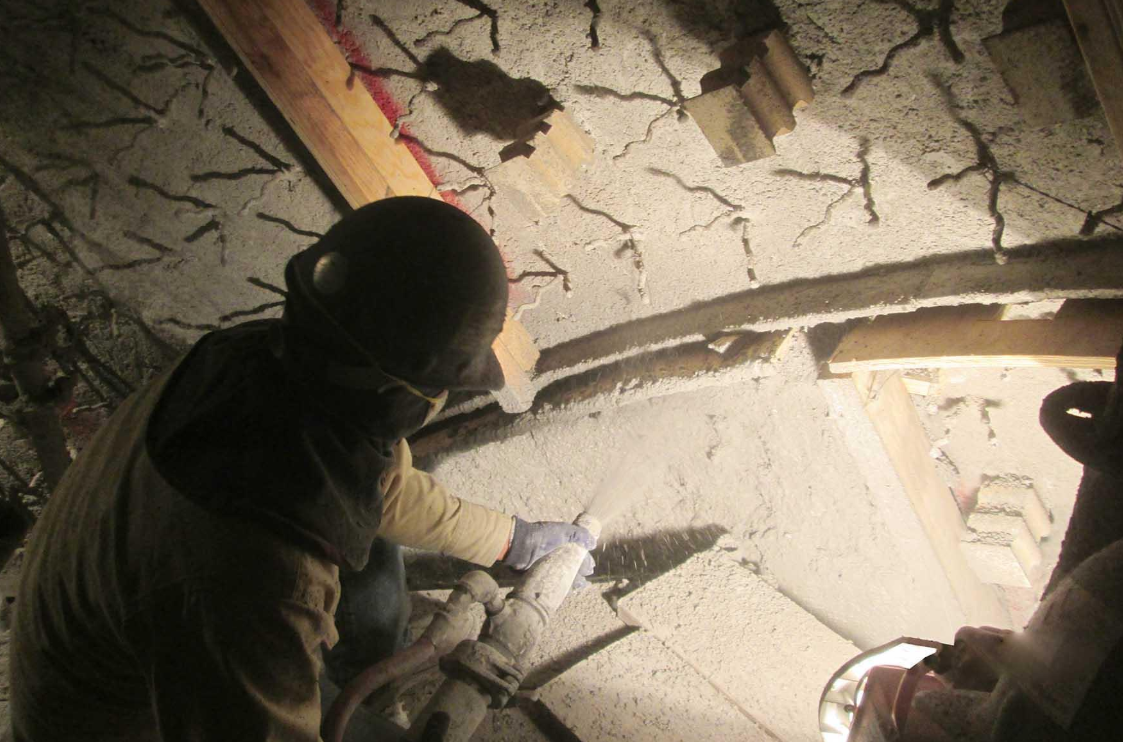
In modern industrial production, furnace performance directly affects energy consumption, product quality, and operating costs. Industries such as steel, cement, metallurgy, glass, and petrochemical processing all require durable and efficient thermal systems. One of the most important materials used to improve furnace performance is the refractory castable.As a professional refractory supplier, understanding how refractory materials influence thermal efficiency can help companies reduce downtime, save energy, and extend furnace service life.What Is Refractory Castable?A refractory castable is a type of monolithic refractory material made from refractory aggregates, powders, and bonding agents. It is widely used as a furnace lining material because of its excellent resistance to high temperatures, thermal shock, and chemical corrosion.Compared with traditional refractory bricks, castables offer easier installation, seamless construction, and better adaptability for complex furnace structures.Common applications include:Steel ladlesRotary kilnsHeating furnacesBoilersIncineratorsCement kilnsHigh Temperature Stability Improves Furnace PerformanceOne of the biggest advantages of high temperature refractory materials is their ability to maintain structural stability under extreme heat conditions.Industrial furnaces often operate at temperatures exceeding 1000°C. Inferior lining materials can crack, deform, or lose insulation performance over time. High-quality refractory castables help maintain stable internal temperatures, reducing heat loss and improving combustion efficiency.Benefits include:Better thermal insulationReduced furnace shell temperatureImproved heat retentionLower fuel consumptionExtended equipment lifespanBy using advanced furnace lining material, manufacturers can ensure stable furnace operation even during continuous high-temperature production cycles.Energy Saving and Reduced Operating CostsEnergy efficiency has become a major concern for industrial manufacturers worldwide. Proper refractory systems can significantly reduce energy waste.A high-performance refractory castable minimizes heat transfer from the furnace interior to the external environment. This allows furnaces to reach target temperatures faster while consuming less fuel or electricity.Key energy-saving advantages include:Faster heating efficiencyReduced thermal conductivityLower maintenance frequencyImproved thermal cycling resistanceReduced unplanned shutdownsFor industries with large-scale thermal equipment, optimized refractory solutions can lead to substantial long-term cost savings.Industrial Furnace ApplicationsModern high temperature refractory products are widely used across multiple industries because of their versatility and durability.Steel IndustryRefractory castables are used in tundishes, ladles, and reheating furnaces where thermal shock resistance is essential.Cement IndustryRotary kilns require durable furnace lining material capable of withstanding abrasion and high operating temperatures.Petrochemical IndustryPetrochemical furnaces rely on corrosion-resistant refractory systems to ensure safe and stable production.Power PlantsBoilers and incinerators use refractory castables to improve thermal efficiency and reduce maintenance downtime.Choosing the right refractory supplier is critical for selecting materials that match specific operating environments.Choosing a Reliable Refractory SupplierA trusted refractory supplier not only provides quality products but also offers technical support and customized furnace lining solutions.When selecting refractory materials, companies should consider:Maximum operating temperatureThermal shock resistanceChemical resistanceInstallation requirementsService life expectationsProfessional suppliers can recommend the most suitable refractory castable products based on industrial application needs.ConclusionEfficient furnace operation depends heavily on the quality of refractory materials. High-performance refractory castable products improve thermal stability, reduce energy consumption, and extend furnace lifespan across multiple industrial applications.As industrial energy standards continue to rise, investing in advanced high temperature refractory and reliable furnace lining material solutions has become essential for modern manufacturing.If you are looking for a dependable refractory supplier, choosing high-quality refractory castables can help improve both operational efficiency and long-term production reliability.
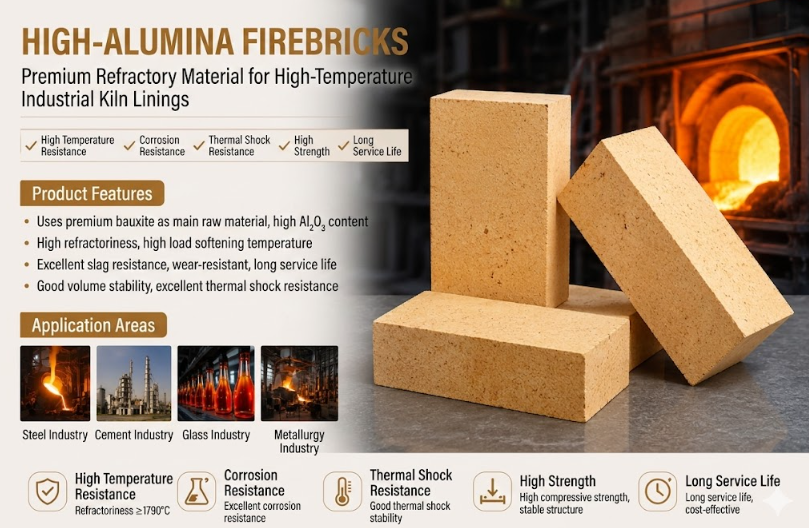
High-alumina refractory bricks are high-quality refractory materials with alumina (Al₂O₃) as the main component, widely used in high-temperature industrial kiln lining systems. This product possesses excellent high-temperature resistance, thermal shock resistance, compressive strength, and corrosion resistance, making it one of the core refractory products commonly used in the steel, cement, glass, and metallurgical industries.Under high-temperature environments, high-alumina refractory bricks maintain structural stability over long periods, resisting deformation or spalling, making them suitable for various harsh operating conditions. Based on alumina content, they can be classified into ordinary high-alumina bricks, medium-high-alumina bricks, and premium high-alumina bricks, with higher alumina content resulting in stronger refractoriness and longer service life.This product is mainly used in critical components such as blast furnaces, hot blast stoves, rotary kilns, heating furnaces, coke ovens, and industrial kiln linings. In the steel industry, high-alumina refractory bricks effectively resist erosion from molten iron and slag; in the cement industry, they can be used in high-wear areas such as kiln openings and transition zones; and in the glass industry, they are used in melting furnace structures to improve overall equipment stability.Compared to ordinary refractory bricks, high-alumina refractory bricks possess superior wear resistance and chemical corrosion resistance, while also exhibiting excellent thermal stability, allowing for long-term use in environments with frequent temperature variations. Therefore, they are widely considered a cost-effective high-temperature industrial refractory material solution.Furthermore, this product demonstrates excellent workability and can be used in conjunction with refractory castables and refractory mortars to improve the overall density and stability of the furnace lining structure.In practical engineering, the appropriate selection of high-alumina brick specifications and models can effectively reduce maintenance frequency and operating costs.Currently, with the increasing global demand for industrial upgrading and energy conservation, the export demand for high-alumina refractory bricks continues to grow, especially in Southeast Asia, the Middle East, and Africa, where they have become one of the important basic refractory materials.In summary, high-alumina refractory bricks, with their excellent comprehensive performance, have become an indispensable core refractory material product in modern high-temperature industries, playing a significant role in extending equipment life and reducing energy consumption.
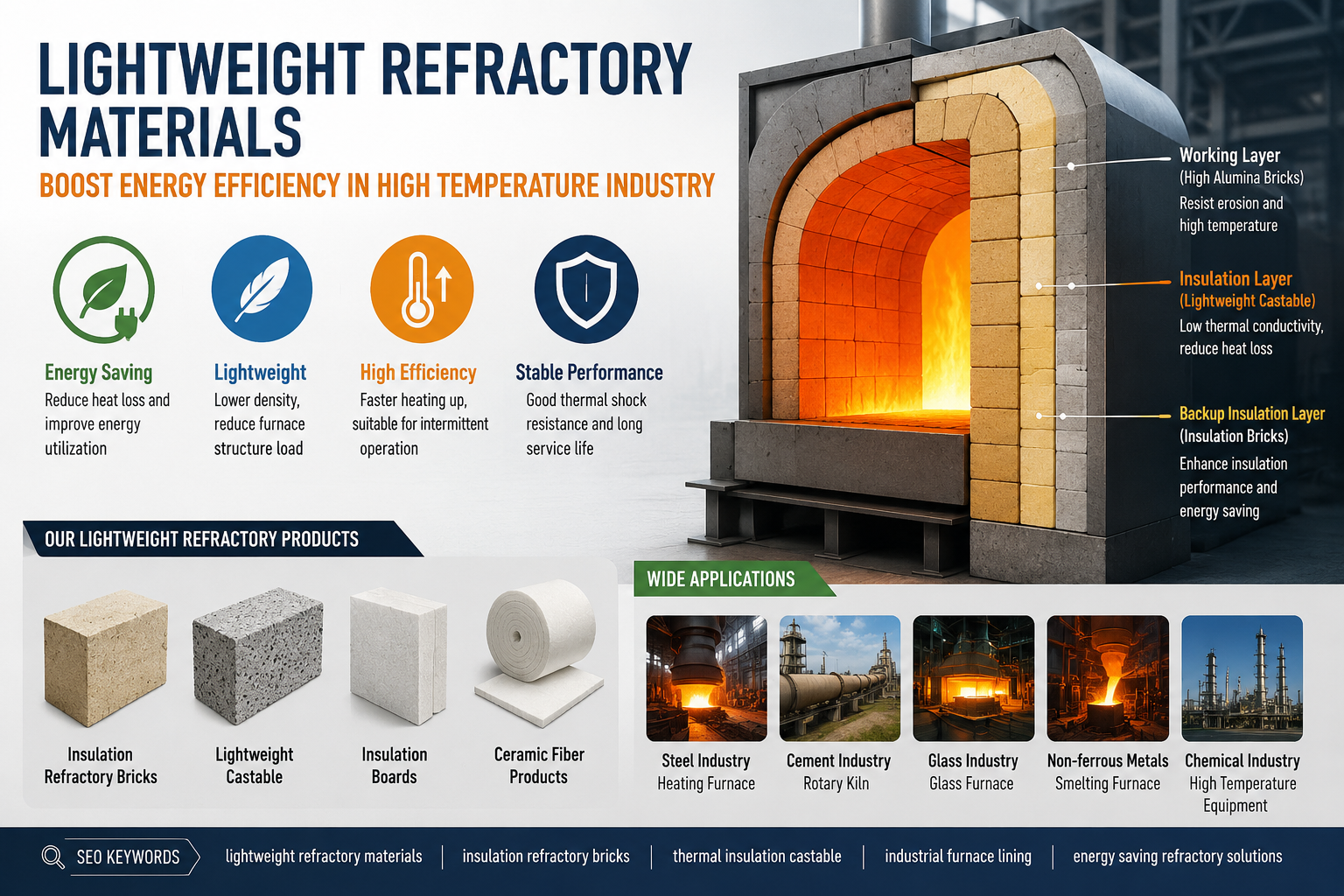
In high-temperature industries such as steel, metallurgy, cement, and glass, energy consumption has always been a key factor in cost control for enterprises. With increasingly stringent requirements for energy conservation and emission reduction, lightweight refractory materials are gradually becoming an important direction for optimizing industrial furnace lining systems.Lightweight refractory materials mainly include lightweight insulating bricks, lightweight castables, heat insulation boards, and some ceramic fiber products. Their core characteristics are low bulk density and low thermal conductivity. Through their internal porous structure design, these materials effectively block heat conduction paths, thereby reducing heat loss from the furnace body and improving overall thermal efficiency. Therefore, they are often referred to as an important component of insulation refractory bricks.In practical industrial applications, lightweight refractory materials typically do not directly withstand severe abrasion or slag erosion. Instead, they are used as heat insulation layers and combined with high-strength refractory bricks or high-alumina bricks to form composite furnace lining structures. For example, in high-temperature heating furnaces, the working layer uses high-alumina bricks or corundum bricks, the insulation layer uses lightweight thermal insulation castable, and the outer layer is further combined with thermal insulation material, thus achieving the dual effect of "strength + energy saving".The advantages of lightweight refractory materials are mainly reflected in three aspects: first, significantly reducing heat loss and improving energy utilization efficiency, corresponding to energy-saving refractory solutions; second, reducing the overall weight of the furnace body and reducing the load on the steel structure; and third, improving heating efficiency, making the furnace body more suitable for intermittent operation conditions. These characteristics have led to their widespread application in steel heat treatment furnaces, cement rotary kilns, glass melting furnaces, and non-ferrous metal smelting equipment.Furthermore, with the development of industrial automation and green manufacturing, enterprises are continuously increasing their requirements for furnace operation stability and energy consumption indicators, leading to a sustained increase in market demand for lightweight refractory materials. At the same time, material technology is also constantly being upgraded; for example, new products such as low thermal conductivity nanoporous structures and composite reinforced lightweight castables are being gradually promoted and applied.Overall, lightweight refractory materials are not only an upgraded alternative to traditional insulation materials, but also an important technological path for achieving energy conservation and emission reduction in high-temperature industries. In the future, their applications will become more systematic, combined with intelligent temperature control and energy-saving furnace design, driving the entire high-temperature industry towards efficiency and low carbon emissions.
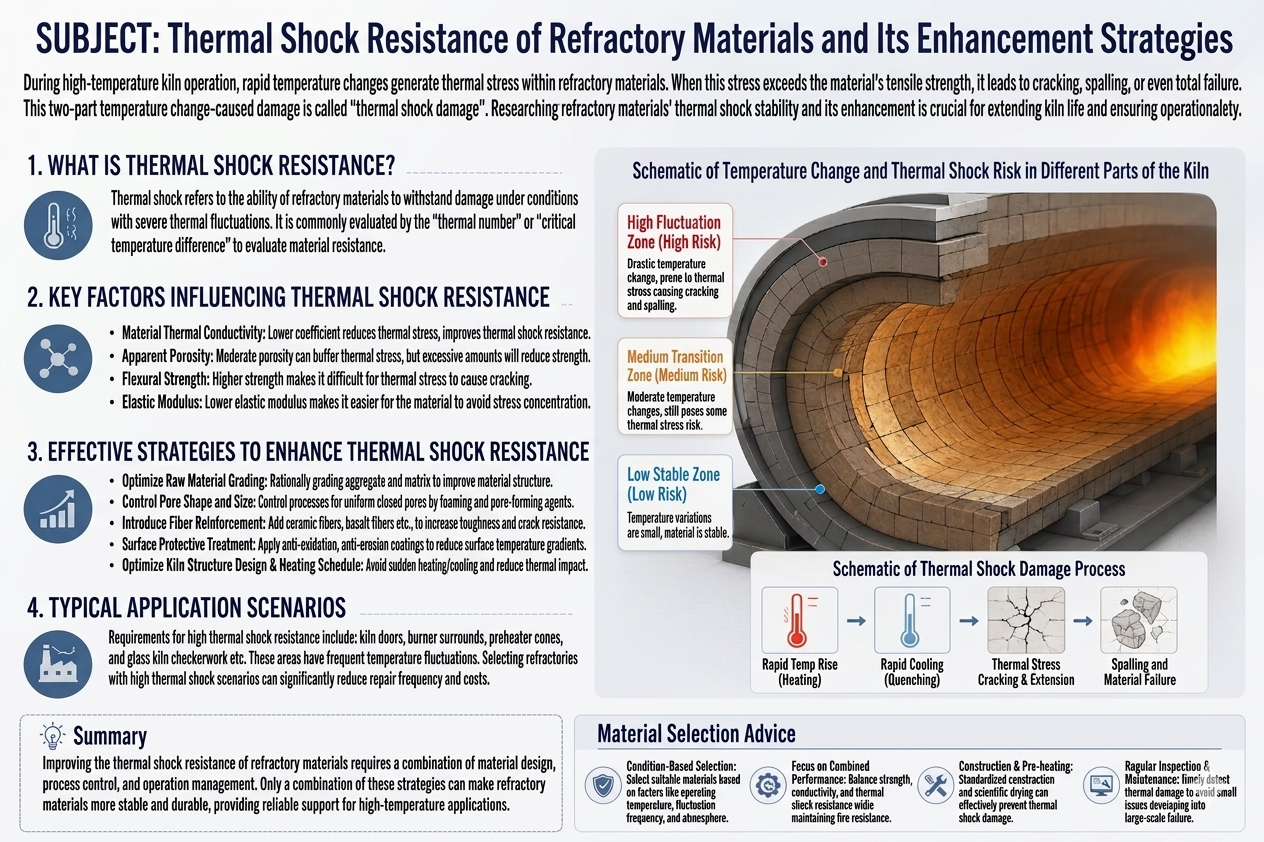
During the operation of high-temperature industrial kilns, refractory materials frequently face rapid heating and cooling environments. For example, in steel smelting, cement rotary kilns, and glass melting furnaces, the start-up and shutdown, combustion fluctuations, or localized temperature changes all generate strong thermal shocks to the refractory materials. If the material cannot withstand these temperature changes, it is prone to cracking, spalling, or even complete detachment; this phenomenon is known as "thermal shock damage."Thermal shock stability, simply put, is the ability of a refractory material to resist drastic temperature changes. The better the thermal shock performance, the longer the service life of the material in high-temperature environments. Therefore, thermal shock stability has become one of the important indicators for evaluating the comprehensive performance of refractory materials.Many factors affect thermal shock stability. First, there is the internal structure of the material, such as apparent porosity, grain structure, and bonding method. An appropriate porosity structure can alleviate thermal stress concentration, thereby reducing the risk of cracking. Second, the material's thermal conductivity and elastic modulus are important; the more uniform the thermal conductivity and the smaller the internal temperature difference, the better the material's stability. In addition, the material's flexural strength and crack resistance also directly affect its performance in thermal cycling. To improve the thermal shock resistance of refractory materials, the industry typically employs various optimization methods. For example, adding heat-resistant fibers to castables enhances material toughness; optimizing particle size distribution reduces internal stress concentration; or using composite structural designs creates a more stable thermal balance between the working layer and the insulation layer. Some new mullite materials, low-cement castables, and nano-modified refractories also exhibit superior thermal shock resistance.Besides the material itself, construction and furnace drying processes are equally important. If the heating rate is too rapid, internal moisture cannot be expelled in time, easily leading to cracks. Therefore, standardized construction, proper furnace drying, and regular maintenance are crucial for extending the lifespan of refractory materials.As high-temperature industries move towards energy conservation and high efficiency, refractory materials not only need high refractoriness but also excellent thermal shock resistance. In the future, high-performance, long-life, and thermally shock-resistant new refractory materials will play an even more important role in the industrial kiln field.
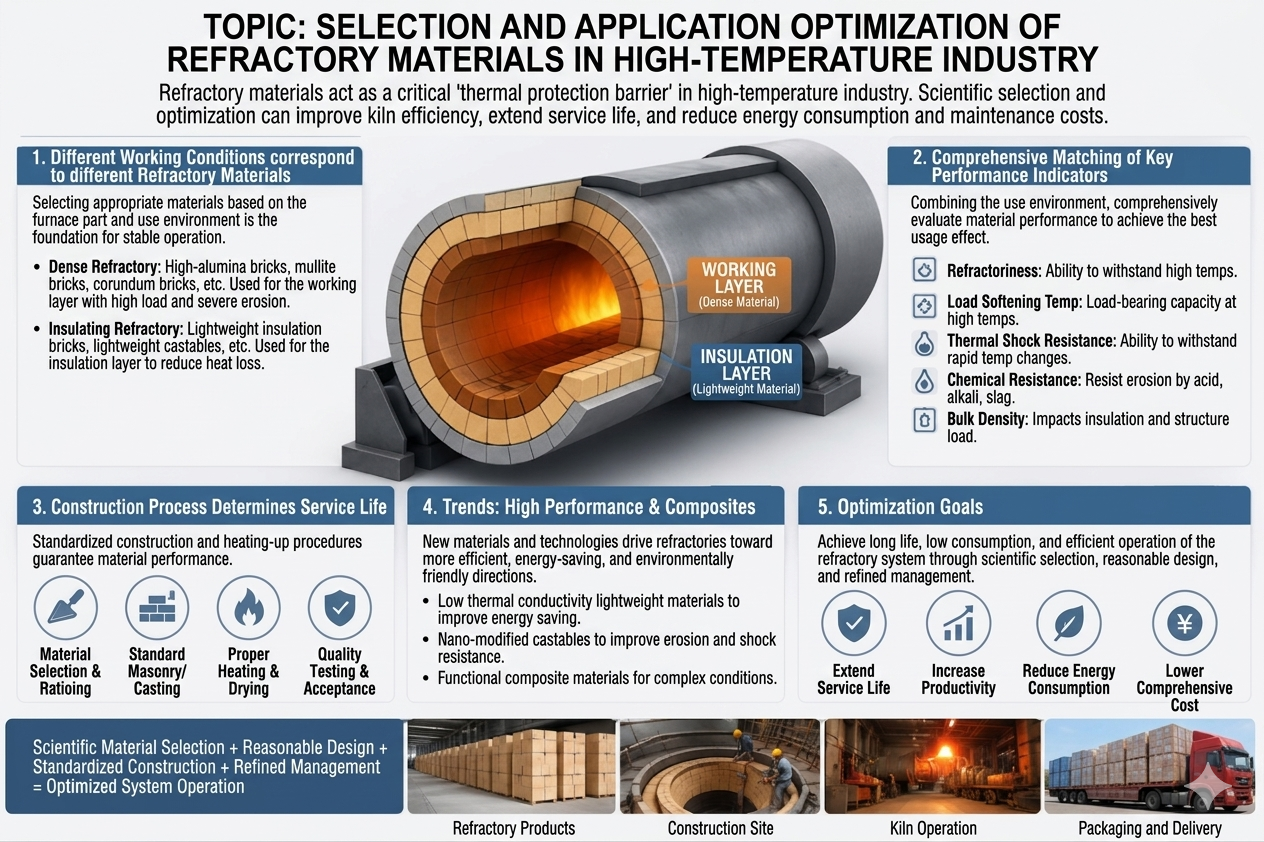
In high-temperature industrial production processes such as steel, cement, glass, and ceramics, refractory materials play a crucial role as a "thermal protection barrier." Their core task is to maintain structural stability and service life under complex environments characterized by high temperatures, chemical corrosion, and mechanical wear. Therefore, the scientific selection and optimization of refractory materials is an important issue for improving the efficiency of industrial kilns and reducing maintenance costs.First, different operating conditions require different types of refractory materials. Common dense refractory materials such as high-alumina bricks, clay bricks, mullite bricks, and corundum bricks are suitable for high-temperature load-bearing areas; while lightweight insulating bricks and lightweight castables are mainly used in the furnace body insulation layer to reduce heat loss and improve energy utilization efficiency. For example, in the lining structure of rotary kilns or blast furnaces, a composite structure design of "working layer + insulation layer" is usually adopted to achieve a balance between refractory performance and energy saving.Second, material performance indicators are the core basis for selection, including refractoriness, load softening temperature, thermal shock resistance, bulk density, and erosion resistance. In practical applications, a higher single indicator is not always better; rather, a comprehensive matching based on the usage environment is necessary. For example, areas with frequent temperature fluctuations should prioritize thermal shock resistance, while highly corrosive environments require enhanced resistance to chemical attack.Furthermore, construction techniques significantly impact the lifespan of refractory materials. Even high-performance materials can suffer from cracking and spalling if the casting, construction, or furnace drying processes are not standardized. Therefore, standardized construction and reasonable furnace drying curve design are crucial for ensuring the stable operation of refractory systems.With increasingly stringent industrial energy conservation and environmental protection requirements, refractory materials are developing towards higher performance, lighter weight, and more functional composites. For example, new products such as low thermal conductivity lightweight materials and nano-modified castables are gradually replacing traditional materials.In conclusion, the scientific selection and system application optimization of refractory materials are not merely material issues, but a comprehensive engineering project encompassing design, construction, and operation management, which is of great significance for improving the overall efficiency of high-temperature industries.
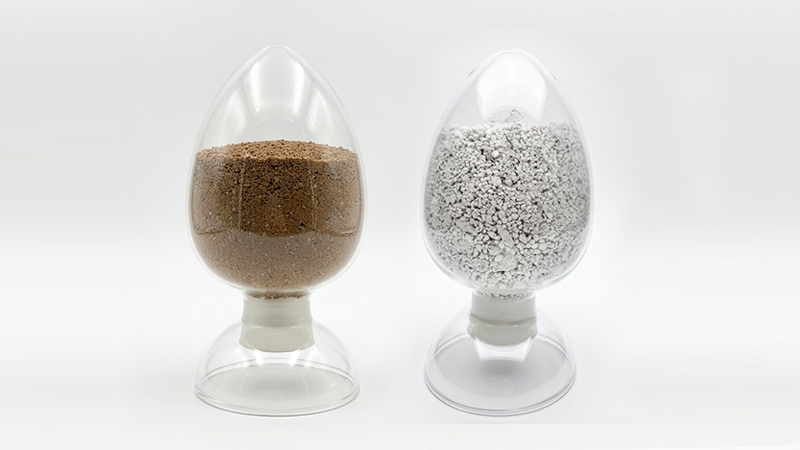
In high-temperature industrial production scenarios, refractory materials undertake the critical mission of high-temperature protection and equipment safeguarding, with their quality directly affecting production safety and efficiency.In high-temperature equipment such as glass melting furnaces, non-ferrous metal smelting furnaces, and waste incineration furnaces, refractory materials form a safe and reliable protection system to resist erosion from extreme high-temperature environments, extend service life of equipment, and reduce downtime. From the insulation layer to the working layer of furnace bodies, from sealing materials to wear-resistant components, refractory materials cover all aspects of high-temperature protection and adapt to customized requirements of various high-temperature working conditions.Refractory materials not only withstand continuous high temperatures but also effectively reduce heat loss, helping enterprises achieve energy conservation and consumption reduction. Widely used in various high-temperature industrial scenarios, they ensure production safety, serve as an indispensable part of the high-temperature protection field, and promote the stable development of industrial production.