How to Select Refractory Materials for the Cement Rotary Kiln Hood? Differences Between Different Areas
The cement rotary kiln hood is an important component around the clinker discharge and cooling area. It is continuously exposed to high-temperature clinker, hot gas flow and dust. Compared with the refractory lining inside the rotary kiln shell, the kiln hood has its own operating characteristics. Therefore, refractory materials for the kiln hood should not simply be selected according to the same lining design used in other areas of the rotary kiln.
During actual operation, cracks, spalling, wear or local refractory lining failure in the kiln hood can increase maintenance requirements and may also cause local heat loss and abnormal surface temperatures on the equipment. Therefore, selecting and configuring refractory materials according to the actual operating conditions of different areas is important for maintaining long-term stable operation.
1. What Operating Conditions Do Refractory Materials in a Kiln Hood Need to Withstand?
After clinker leaves the rotary kiln and enters the cooling system, the area around the kiln hood is continuously affected by high-temperature clinker and hot gas flow.
During operation, the refractory lining may also be subjected to:
High thermal loads;
Abrasion from clinker and dust;
Continuous hot gas flow;
Temperature changes during equipment start-up and shutdown;
Thermal expansion and contraction of the refractory lining;
Construction difficulties caused by complex structural areas.
Therefore, refractory materials used in the kiln hood need to be selected according to requirements such as high-temperature resistance, wear resistance, thermal shock resistance and construction adaptability.
2. Why Should Different Areas of the Kiln Hood Use Different Refractory Materials?
A kiln hood is not an area with completely uniform operating conditions.
Areas close to high-temperature clinker and hot gas flow are generally subjected to greater thermal loads and abrasion. Other areas farther away from the high-temperature zone may place greater emphasis on thermal insulation and structural stability.
Using the same high-performance refractory material throughout the entire kiln hood may simplify purchasing and construction, but it is not necessarily the most economical or technically appropriate solution.
A more reasonable approach is to design the refractory lining according to the actual conditions of each area:
High-temperature areas should focus on high-temperature resistance and structural stability.
Areas subject to significant wear should focus on wear resistance and resistance to abrasion.
Areas with relatively lower temperatures can incorporate lightweight insulation materials according to the insulation requirements.
This approach can meet the requirements of different areas while helping control the overall refractory material cost.
3. What Refractory Materials Are Commonly Used in Kiln Hoods?
3.1 High Alumina Refractory Castable
High alumina refractory castables are common monolithic refractory materials used in industrial furnaces and kilns. They can form a continuous lining through casting.
For areas of a kiln hood with complex structures and irregular shapes, castable installation can provide certain construction advantages.
When selecting a high alumina castable, the actual working temperature, wear conditions, installation method and specific application area should all be considered. It is not advisable to select a material simply because it has higher physical and chemical performance indicators.
3.2 Wear-Resistant Castable
If certain areas of the kiln hood are exposed to significant abrasion from clinker particles, dust or high-speed gas flow, wear resistance should be given particular attention.
The purpose of using a wear-resistant castable is not simply to increase the maximum service temperature. It is mainly designed to reduce lining damage caused by material impact, particle abrasion and mechanical wear.
3.3 Steel Fiber Reinforced Castable
For areas exposed to mechanical impact, thermal shock or significant wear, steel fiber reinforced castables can be considered according to the actual operating conditions.
Steel fibers can improve the material's resistance to impact and thermal shock. However, their suitability should be evaluated according to the service temperature, furnace atmosphere and construction requirements.
3.4 Lightweight Insulation Materials
Not every area of a kiln hood requires a high-density refractory material.
For areas that primarily serve an insulation function, suitable lightweight insulation materials can be incorporated into the lining structure according to the design requirements.
This layered approach allows the refractory working layer and insulation layer to work together, balancing refractory performance and overall thermal insulation.
4. Why Do Refractory Linings in Kiln Hoods Tend to Crack?
4.1 Thermal Stress Caused by Temperature Changes
During equipment start-up, shutdown or changes in production conditions, the temperature of the refractory lining changes accordingly.
Refractory materials expand when heated and contract when cooled. If the lining structure, construction method or expansion joint arrangement is not properly designed, significant internal stress may develop.
4.2 Mismatch Between Material Selection and Actual Operating Conditions
If the wear resistance, thermal shock resistance or corrosion resistance of the refractory material does not meet the actual operating requirements, damage may still occur after long-term operation even when the installation quality is acceptable.
Therefore, refractory material selection should be based on an analysis of actual operating conditions rather than simply on the product name.
4.3 Improper Water Addition and Vibration During Installation
During castable installation, an improper amount of added water can affect the final properties of the material.
Insufficient vibration may result in poor compactness and uneven structure, while excessive vibration can also cause segregation in some castable systems.
After installation, improper curing or heating-up procedures may further increase the risk of cracking and spalling.
4.4 Problems with Anchors and Structural Design
Kiln hoods contain complex relationships between the steel structure and refractory lining.
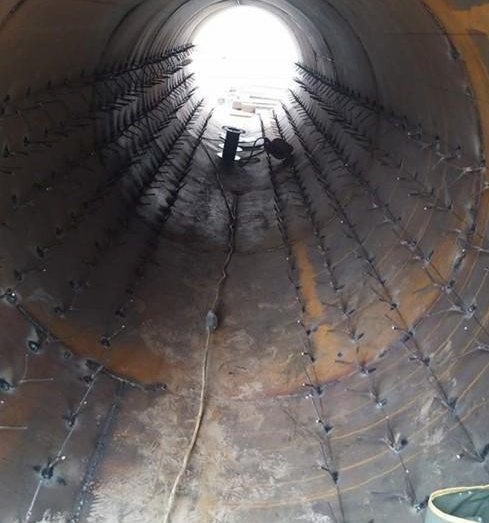
If refractory anchors are improperly arranged, welded or installed, local stress concentrations may occur during operation. This can lead to cracks or even local refractory lining detachment.
5. How Should Refractory Materials for a Kiln Hood Be Properly Configured?
In practical projects, refractory selection can generally follow the steps below.
Step 1: Determine the working temperature of each area.
First determine the actual temperature of different areas of the kiln hood rather than selecting materials based solely on the maximum temperature of the entire equipment.
Step 2: Analyze the source of wear.
Determine whether the main cause of lining wear is clinker impact, dust abrasion or hot gas flow.
Step 3: Evaluate temperature fluctuations.
For equipment that experiences frequent start-ups and shutdowns or significant temperature fluctuations, thermal shock resistance should be carefully considered.
Step 4: Determine the installation method.
Areas with simple and regular structures may require different installation methods from complex or irregular areas. Casting, patching and other installation methods should be considered in advance.
Step 5: Properly combine the refractory and insulation layers.
For areas that do not directly contact high-temperature media, a combination of refractory and insulation materials can be used according to the lining design. This can avoid using high-density refractory materials in every area.
6. What Should Be Done When Local Damage Occurs in a Kiln Hood?
When local refractory lining spalling or cracking occurs, the first step is to determine the location and extent of the damage.
For minor local damage, a compatible repair material can be selected according to the site conditions.
If a large area of the lining has fallen off, simply applying repair material to the surface is not sufficient. The following conditions should also be inspected:
Whether the original refractory lining has become loose;
Whether deformation exists in the underlying structure;
Whether the refractory anchors are still in good condition;
Whether continuous cracks exist around the damaged area;
Whether significant thermal abrasion or wear is occurring.
Only after identifying the underlying cause should the appropriate repair material be selected. This can help prevent the same type of damage from occurring again after repair.
7. How Can the Service Stability of a Kiln Hood Refractory Lining Be Improved?
The service life of a kiln hood refractory lining depends not only on the refractory material itself, but also on design, installation, operation and maintenance.
During construction, the water addition, mixing, vibration, curing and heating-up procedures should be properly controlled according to the material requirements.
During operation, the refractory lining should be regularly inspected for cracks, spalling, abnormal wear and localized temperature increases.
When abnormal conditions are identified, the cause should be analyzed and corrective action taken promptly rather than waiting until a large section of the refractory lining has failed.
Conclusion
The selection of refractory materials for a cement rotary kiln hood should be based on the actual temperature, wear, abrasion, thermal shock and structural conditions of different areas.
High alumina castables, wear-resistant castables, steel fiber reinforced castables and lightweight insulation materials each have different advantages under different operating conditions.
A reasonable refractory solution does not necessarily mean using the same material throughout the entire kiln hood. Instead, materials should be selected and configured according to the actual operating conditions of different areas through zoned and layered lining design.
For cement plants, the ultimate goal of refractory selection is not only to meet temperature resistance requirements, but also to achieve a balance between lining stability, installation and maintenance requirements, and long-term equipment operation.
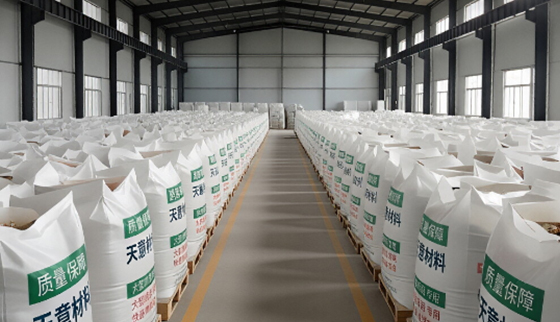
TIANYI REFRACTORY MATERIALS CO., LTD. provides high alumina refractory castables, wear-resistant castables, steel fiber reinforced castables, lightweight insulation materials, refractory bricks and related refractory and insulation products for industrial furnaces and kilns.
We can recommend and configure suitable refractory materials according to different industrial equipment, operating conditions and specific application areas. Our solutions cover various industrial sectors, including glass, steel, cement, petrochemical and lime industries.