Castable or Refractory Bricks for Fluidized Bed Furnaces? How to Choose the Right Refractory Material
Castable or Refractory Bricks for Fluidized Bed Furnaces?
Fluidized bed furnaces are widely used in industrial heating, calcination, roasting and material processing applications. Their refractory linings are exposed to high temperatures, continuous material impact, mechanical abrasion and repeated temperature changes.
Therefore, when selecting refractory materials for a fluidized bed furnace, one common question is:
Should a fluidized bed furnace use refractory castables or refractory bricks?
In fact, both solutions can be used. The appropriate choice depends on the furnace structure, operating temperature, material characteristics, abrasion conditions, construction requirements, maintenance conditions and overall cost.
1. Why Does a Fluidized Bed Furnace Need a Refractory Lining?
During operation, the refractory lining of a fluidized bed furnace may be exposed to several demanding conditions:
High operating temperatures
Continuous material impact
Mechanical abrasion from solid particles
Repeated heating and cooling
Chemical attack from process materials or slag
High local thermal loads
If the refractory lining is not properly selected, problems such as cracking, spalling, accelerated wear or local failure may occur, resulting in more frequent shutdowns and maintenance.
Therefore, refractory materials for fluidized bed furnaces need not only good refractoriness, but also appropriate abrasion resistance, thermal shock resistance and chemical resistance according to the specific operating conditions.
2. Using Refractory Castables in Fluidized Bed Furnaces
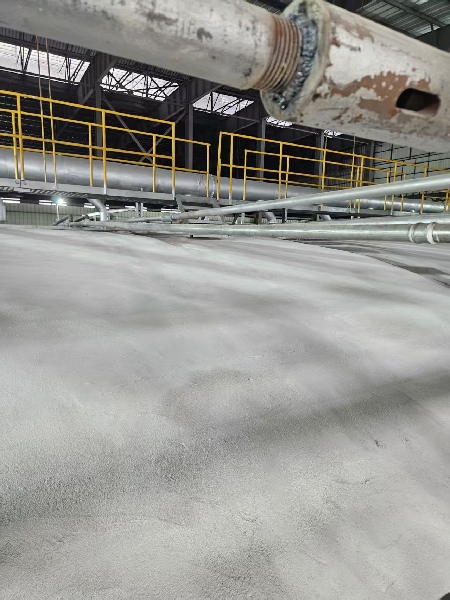
Refractory castables are made from refractory aggregates, fine powders, binders and other additives. They are installed on site by mixing, casting or other suitable construction methods to form an integral refractory lining.
Main Advantages of Refractory Castables
① Good Structural Integrity
Once properly installed and cured, castables can form an integral lining structure, reducing the weak points associated with brick joints.
② Suitable for Complex Structures
Castables are particularly suitable for irregular structures, arches, ducts and areas requiring customized shapes.
③ Flexible Construction
Castables can be installed according to the actual dimensions and geometry of the furnace, making them convenient for maintenance and local repairs.
④ Refractory Properties Can Be Designed for Specific Conditions
For areas subject to severe material impact and abrasion, suitable abrasion-resistant high-alumina castables, corundum castables or other specially formulated products can be selected.
What Should Be Considered When Using Castables?
Although castables offer flexible construction, installation quality has a significant impact on their service life.
Important factors include:
Strict control of the amount of mixing water
Proper mixing time
Sufficient curing after casting
Correct dry-out and heating procedures
Proper lining thickness
Appropriate anchoring and structural design
For large fluidized bed furnaces, proper installation and controlled dry-out are especially important.
3. Using Refractory Bricks in Fluidized Bed Furnaces
Refractory bricks are prefabricated refractory products that are shaped and fired at high temperatures before being installed.
Common types include:
High alumina bricks, in particular, contain a relatively high level of Al₂O₃ and provide good refractory performance for a variety of high-temperature industrial applications.
Main Advantages of Refractory Bricks
① Good Dimensional Stability
Refractory bricks are fired at high temperatures and generally have good structural stability during service.
② Good Abrasion Resistance
For areas exposed to significant material impact and mechanical wear, high-strength refractory bricks can be selected according to the operating conditions.
③ Mature Installation Technology
Bricklaying is a well-established installation method and is suitable for regular furnace walls and certain furnace-bottom structures.
④ Convenient Local Replacement
If individual bricks become damaged, the affected area can be removed and replaced without necessarily rebuilding the entire lining.
4. How to Choose Between Castables and Refractory Bricks?
There is no absolute winner between refractory castables and refractory bricks. The selection should be based on the actual operating conditions.
| Comparison | Refractory Castable | Refractory Brick |
|---|
| Installation method | On-site casting | Bricklaying |
| Structural integrity | Generally good | Brick joints present |
| Adaptability to complex structures | Excellent | Relatively limited |
| Construction flexibility | High | Relatively lower |
| Abrasion resistance | Can be designed according to requirements | Depends on brick type |
| Local repair | Suitable for patching and repair | Individual bricks can be replaced |
| Dry-out requirements | Relatively important | Generally lower |
| Typical applications | Furnace walls, bottoms, irregular areas, etc. | Regular furnace walls and high-wear areas, etc. |
5. Can a Fluidized Bed Furnace Use a Combination of Bricks and Castables?
In many practical projects, it is not necessary to use only one type of refractory material throughout the entire furnace.
A combination of refractory bricks and castables can be designed according to the operating conditions of different furnace sections.
Furnace Bottom
The furnace bottom may be exposed to high temperatures and continuous material impact. Depending on the operating conditions, high-strength abrasion-resistant castables or refractory bricks may be selected.
Furnace Walls
For regular structures requiring long-term dimensional stability, refractory bricks can be used. Integral castable linings are also possible depending on the furnace design.
High-Wear Areas
For areas exposed to continuous particle impact, special attention should be given to abrasion-resistant castables, high-alumina castables or high-strength refractory bricks.
Irregular and Maintenance Areas
For complex structures or areas requiring rapid repair, castables generally provide greater construction flexibility.
Therefore, a combined refractory lining system can often provide a more practical solution for large fluidized bed furnaces.
6. What Factors Should Be Considered When Selecting Refractory Materials?
Before selecting the refractory material, it is recommended to evaluate the following parameters:
① Operating Temperature
Determine the normal operating temperature and maximum service temperature.
② Material Characteristics
Consider particle size, hardness, chemical composition and material flow conditions.
③ Abrasion Conditions
Determine whether the refractory lining will be continuously exposed to high-speed particles or severe mechanical abrasion.
④ Chemical Attack
Analyze whether the process materials, slag or gases may cause acidic, alkaline or other forms of chemical attack.
⑤ Furnace Structure
Consider the specific requirements of the furnace bottom, walls, roof, ducts and irregular sections.
⑥ Construction Conditions
Evaluate available installation space, construction equipment, installation time and dry-out conditions.
⑦ Maintenance Cycle and Overall Cost
Do not compare refractory materials based only on their purchase price. Installation costs, downtime, maintenance frequency and service life should also be considered.
7. TIANYI REFRACTORY Provides Refractory Solutions for Fluidized Bed Furnaces
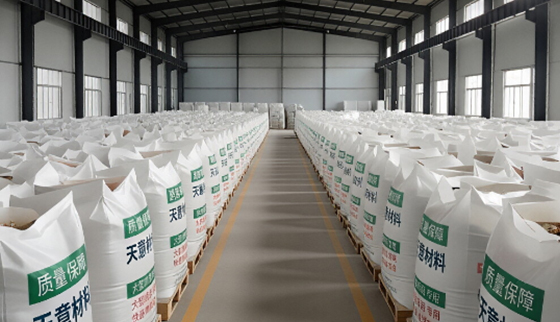
TIANYI REFRACTORY MATERIALS CO., LTD. provides refractory bricks, refractory castables and thermal insulation materials for high-temperature industrial equipment.
Depending on the operating temperature, abrasion level and construction requirements of different furnace sections, various refractory materials can be selected, including:
High Alumina Refractory Bricks
High Alumina Dense Castable
Lightweight Insulating Refractory Castable
Mullite Bricks
Magnesia-Alumina Spinel Castable
Thermal Insulation Materials
For high-temperature and high-abrasion applications, refractory materials can be selected according to actual operating conditions, including Al₂O₃ content, bulk density, abrasion resistance, refractoriness and thermal shock resistance.
8. Conclusion
Selecting refractory materials for a fluidized bed furnace is not simply a choice between castables and refractory bricks. The material should be selected according to the actual operating conditions.
If the furnace has a complex structure and requires good structural integrity and flexible on-site construction, refractory castables can provide excellent adaptability.
For areas requiring high dimensional stability, abrasion resistance and long-term service performance, high alumina bricks, mullite bricks and other refractory bricks may be more appropriate.
For large fluidized bed furnaces, a combination of refractory bricks + refractory castables + thermal insulation materials can also be used according to the operating conditions of different areas.
This approach can help achieve a better balance between refractory performance, construction efficiency, service life and overall operating cost.