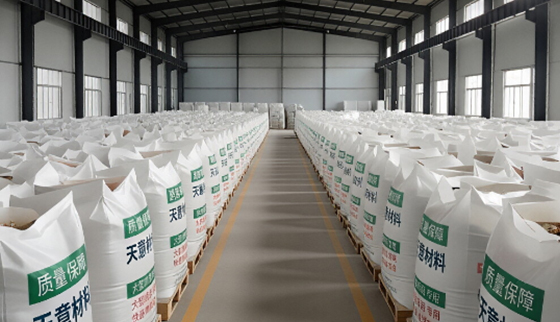
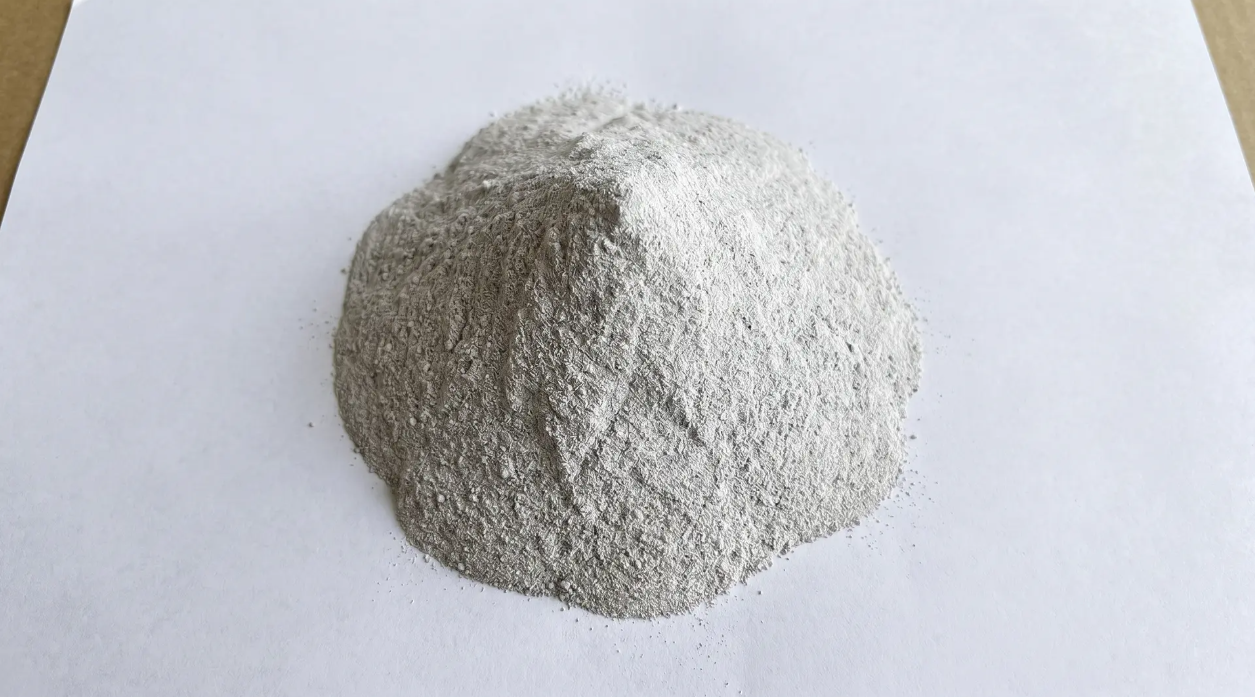
Industrial furnaces are expected to operate continuously under extreme temperatures while maintaining efficiency and minimizing downtime. As operating conditions become more demanding, traditional refractory materials may struggle to meet the requirements of modern high-temperature industries.
Corundum self-flow castables have become a preferred solution because they combine excellent installation performance with outstanding mechanical strength and high-temperature stability. Their ability to flow into complex structures without extensive vibration makes them particularly suitable for modern furnace construction and maintenance.
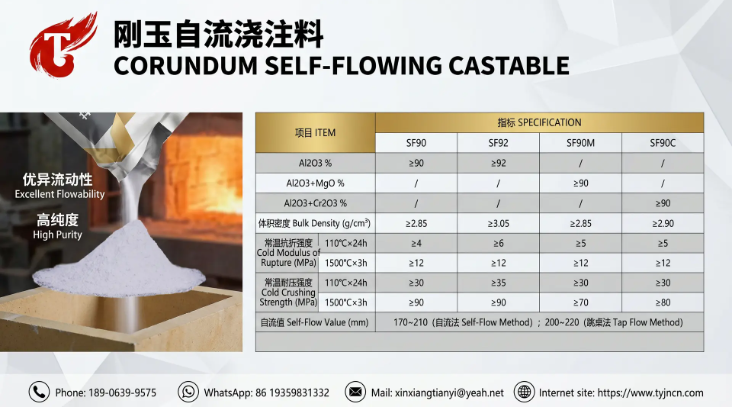 What Is a Corundum Self-Flow Castable?
A corundum self-flow castable is a high-performance refractory material made primarily from high-purity corundum aggregates and fine powders. With optimized binders and additives, the material develops excellent flowability after mixing with water.
Unlike conventional castables, self-flow castables can spread naturally under their own weight, filling narrow gaps and complicated molds with minimal vibration. This helps achieve a dense, uniform lining while reducing installation time.
Superior Flowability Improves Installation Quality
One of the greatest advantages of self-flow technology is its ability to reduce common construction defects.
Because the material fills every corner of the mold more easily, it minimizes the risk of:
Air pockets
Honeycomb structures
Incomplete filling
Uneven density
The result is a more reliable furnace lining with fewer weak points.
High Temperature Stability
Corundum is well known for its exceptional refractoriness.
Even under prolonged exposure to extremely high temperatures, corundum self-flow castables maintain excellent structural integrity, minimizing deformation and maintaining reliable support for furnace operations.
This makes them ideal for demanding thermal environments where long-term stability is essential.
Excellent Wear Resistance
Industrial furnaces often experience severe abrasion from raw materials, molten products, high-speed gas flow, and mechanical impact.
Thanks to their dense microstructure and high hardness, corundum self-flow castables offer outstanding resistance to wear, helping extend furnace lining service life while reducing maintenance frequency.
Better Resistance to Thermal Shock
Frequent heating and cooling cycles generate thermal stress inside refractory linings.
A well-designed corundum self-flow castable provides improved resistance to thermal shock, reducing the likelihood of cracking and spalling during repeated temperature fluctuations.
This contributes to safer operation and longer maintenance intervals.
Typical Industrial Applications
Corundum self-flow castables are widely used in many high-temperature industries, including:
Their excellent flowability makes them especially valuable for complicated structures and difficult-to-access installation areas.
Proper Installation Maximizes Performance
Material quality is only one part of the equation.
To achieve the best performance, operators should:
Control the recommended water addition
Mix thoroughly using appropriate equipment
Pour continuously whenever possible
Follow proper curing procedures
Carry out a controlled drying and heating schedule before operation
Correct installation practices help maximize lining density, durability, and service life.
Conclusion
Modern industrial furnaces require refractory materials that combine reliability, durability, and installation efficiency.
Corundum self-flow castables offer a unique combination of high flowability, excellent strength, superior wear resistance, and outstanding high-temperature performance. When properly selected and installed, they help reduce maintenance costs, improve operational efficiency, and extend the service life of critical furnace equipment.