Every Degree of Heat Loss Has a Cost
Industrial furnaces are designed to operate efficiently under extreme temperatures. However, many plants focus only on burners, fuel quality, or production speed while overlooking one critical factor—the condition of the furnace lining.
Even small defects in refractory materials can allow large amounts of heat to escape, forcing equipment to consume more fuel just to maintain operating temperatures.
Over time, this invisible energy loss becomes one of the largest operating expenses for steel plants, glass manufacturers, cement factories, foundries, and ceramic producers.
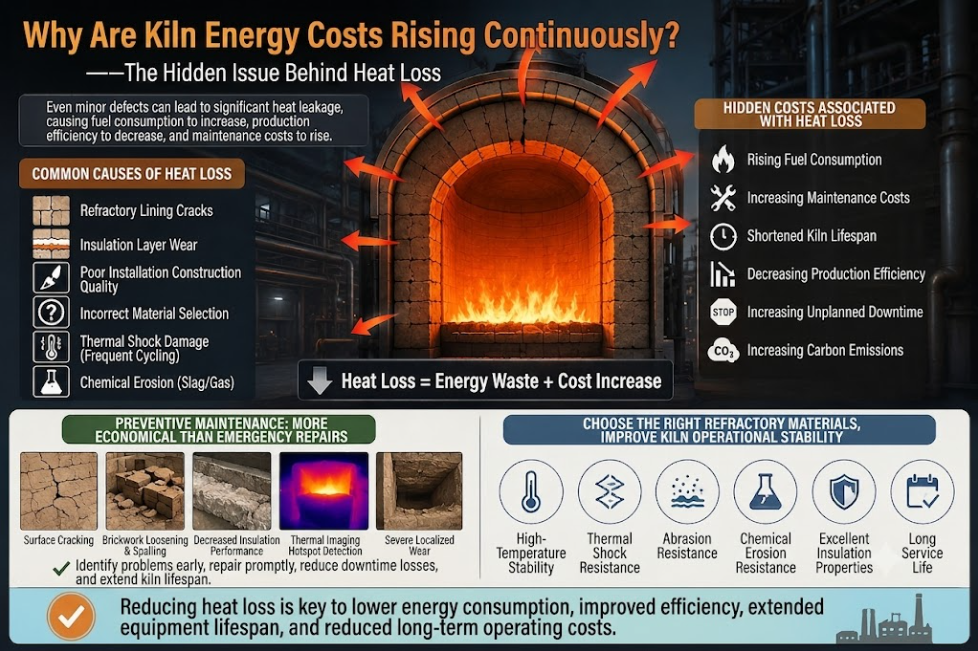
Common Causes of Heat Loss
Several factors contribute to declining furnace efficiency:
Cracked refractory linings
Worn insulation layers
Poor installation quality
Incorrect material selection
Thermal shock damage from repeated heating and cooling
Chemical corrosion caused by slags or process gases
These problems rarely appear overnight. They gradually develop until fuel consumption increases and maintenance becomes unavoidable.
The Cost Goes Beyond Fuel
Heat loss affects much more than energy bills.
As furnace temperatures become unstable, production quality may fluctuate, equipment components experience greater thermal stress, and unexpected shutdowns become more frequent.
The hidden costs often include:
Higher natural gas or coal consumption
Increased maintenance expenses
Reduced furnace campaign life
Lower production efficiency
More unplanned downtime
Higher carbon emissions
For many factories, these indirect losses exceed the actual cost of replacing damaged refractory materials.
Prevention Is More Economical Than Emergency Repairs
Rather than waiting for visible failures, many successful manufacturers perform routine inspections of their furnace linings.
Preventive maintenance helps identify:
Early repairs are usually faster, less expensive, and far less disruptive than emergency shutdowns.
Choosing Materials That Match Operating Conditions
No single refractory solution fits every furnace.
Different industries require materials designed for their own operating environments, including:
High-temperature resistance
Thermal shock resistance
Abrasion resistance
Chemical corrosion resistance
Excellent insulating performance
Long service life
Selecting the proper material according to operating temperature, atmosphere, and mechanical stress significantly improves furnace reliability.
Final Thoughts
Improving furnace efficiency is not always about installing new equipment.
Sometimes the greatest opportunity lies in reducing heat loss through better refractory design, proper maintenance, and selecting materials suited to real operating conditions.
A well-maintained furnace not only saves energy but also improves production stability, extends equipment life, and reduces long-term operating costs.