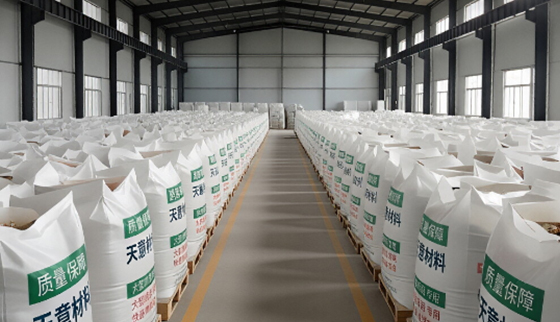
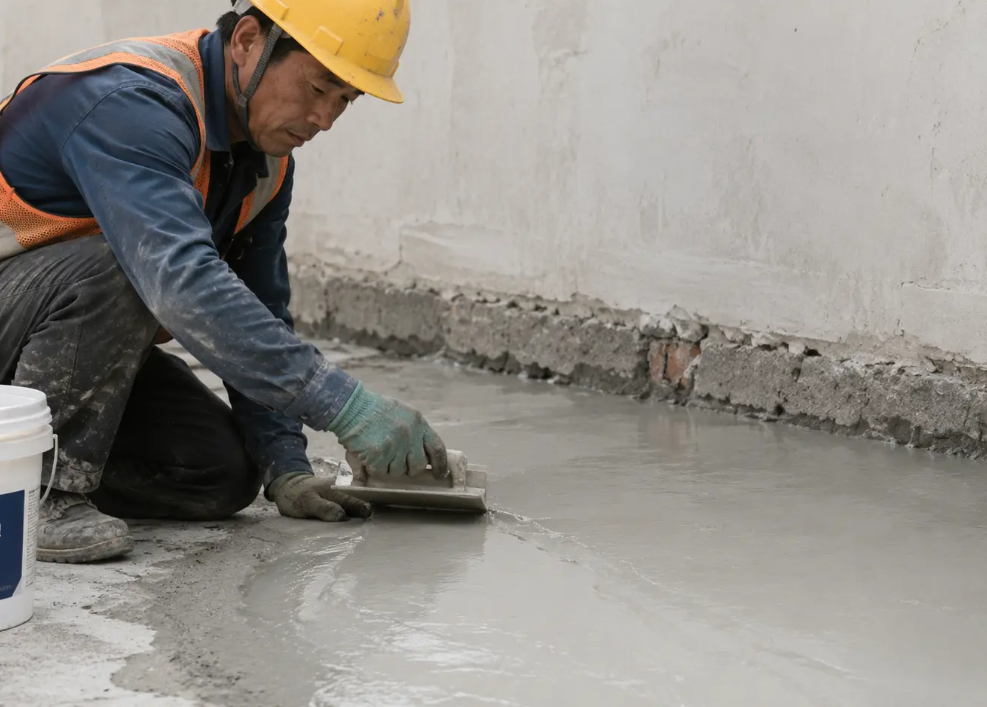
In cement production plants, refractory castables are widely used as lining materials in high-temperature equipment such as rotary kilns, preheaters, calciners, and grate coolers. After installation, surface pores, honeycomb structures, or loose areas may appear on the castable surface. These defects not only affect the compactness of the refractory lining but also reduce wear resistance, corrosion resistance, and service life. In severe cases, they may cause premature failure of the refractory lining and affect the stable operation of cement production equipment.
The formation of surface pores in cement plant refractory castables is caused by multiple factors, including raw material quality, construction procedures, vibration methods, water addition control, mold conditions, curing processes, and heating procedures.
Raw material quality is one of the most important factors affecting castable porosity. Refractory castables are mainly composed of refractory aggregates, fine powders, binders, and additives. If the raw materials are not properly selected or contain excessive impurities, the internal structure and density of the castable will be affected. For example, materials containing excessive limestone or free calcium oxide may react with water during mixing and installation, causing volume changes and damaging the internal structure.
During high-temperature operation, carbonate impurities may decompose and release gas:
CaCO₃ → CaO + CO₂↑
If the generated gas cannot escape effectively, it may remain inside the castable and form pores. In addition, improper material formulation, such as insufficient fine powder content, poor particle size distribution, or excessive binder content, can prevent the slurry from fully filling the gaps between aggregates, resulting in increased porosity and surface defects.
Construction methods also play an important role in preventing castable pores. During mixing, transportation, and pouring, a certain amount of air may enter the material. If vibration is insufficient during installation, the trapped air cannot be removed effectively, resulting in internal air bubbles and surface holes.
This problem is especially common around anchor areas, corners, and narrow spaces where vibration equipment cannot work effectively. Insufficient vibration may leave air pockets inside the castable, while excessive vibration can cause aggregate segregation and reduce structural uniformity. Therefore, proper vibration time and methods should be selected according to the type of refractory castable and construction conditions.
Water addition control is another critical factor affecting castable performance. During installation, the amount of water added must strictly follow the manufacturer's technical requirements. Excessive water improves flowability but creates more pores after evaporation, resulting in lower density, reduced strength, and poor wear resistance. On the other hand, insufficient water reduces workability, making it difficult for the castable to fill the mold completely and increasing the risk of internal voids.
Proper mixing is also essential for achieving a dense refractory structure. If the mixing time is insufficient, refractory aggregates, fine powders, binders, and additives may not be evenly distributed. This can create areas with insufficient bonding materials or uneven structures, leading to pore formation. Forced mixers are recommended to ensure complete dry mixing and wet mixing until a uniform consistency is achieved.
The quality and installation of molds can also influence the final surface condition of refractory castables. Loose mold joints or leakage may cause cement slurry loss during pouring, leaving exposed aggregates and creating honeycomb structures or surface pores. In addition, improper use of release agents, excessive coating thickness, or unclean mold surfaces may affect the smoothness and density of the castable surface. Therefore, molds should be carefully inspected before construction to ensure proper sealing, stability, and surface condition.
Environmental conditions during construction should also be considered. Cement plant maintenance projects are often carried out under different temperature and humidity conditions. In high-temperature environments, rapid water evaporation from the castable surface can cause insufficient hydration, resulting in surface shrinkage, looseness, and increased porosity. In cold conditions, the hydration process slows down, affecting early strength development. Proper construction measures should be adopted according to the site environment.
Insufficient curing is another common reason for surface porosity. After installation, refractory castables require proper curing to complete hydration reactions and develop strength. If curing time is too short or the surface loses moisture too quickly, the surface layer may become weak, dusty, and porous, reducing the overall performance of the lining.
In addition, improper heating procedures after installation may also cause serious problems. Cement kiln refractory castables contain free water and chemically bonded water. If the temperature rises too quickly during the initial heating process, water may rapidly turn into steam. When the steam pressure exceeds the strength of the castable structure, cracks, spalling, and internal pores may occur. Therefore, the initial heating process must follow a proper temperature schedule recommended by the refractory manufacturer.
To reduce surface porosity in cement plant refractory castables, strict quality control should be implemented throughout the entire process. High-quality raw materials and properly designed formulations should be selected to ensure stable chemical composition and particle distribution. During construction, water addition, mixing, vibration, and mold installation must be carefully controlled. Proper curing and controlled heating procedures are also necessary to ensure the castable achieves maximum strength and durability.
Surface pores in cement plant refractory castables are not caused by a single factor but are the result of combined effects from materials, construction techniques, curing conditions, and heating processes. Through comprehensive quality control from material selection to installation and operation, the porosity of refractory castables can be effectively reduced. This improves wear resistance, thermal shock resistance, corrosion resistance, and service life, helping cement plants reduce maintenance costs and improve equipment reliability.
Choosing a professional refractory castable manufacturer and applying standardized construction methods are essential for ensuring long-term and stable operation of high-temperature cement kiln equipment.