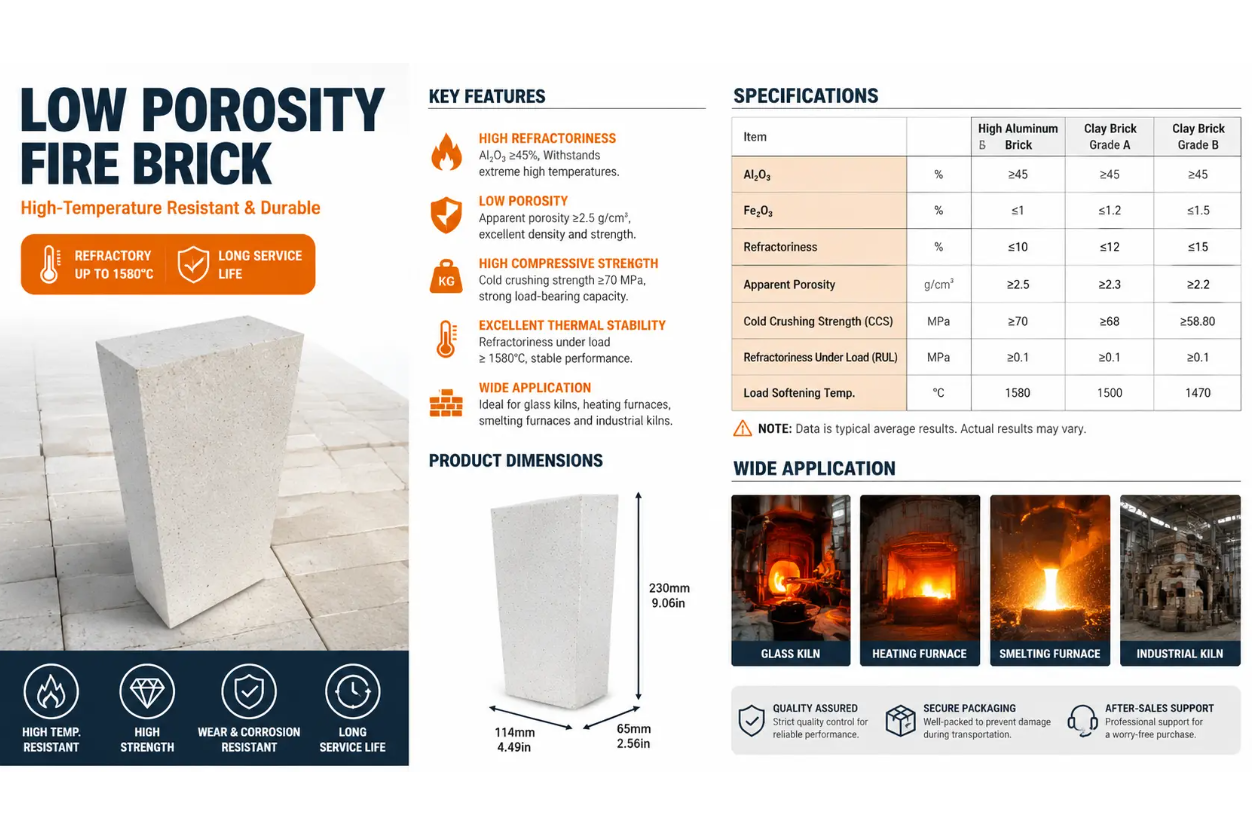
The main difference between low porosity clay bricks and ordinary fire clay bricks lies in their manufacturing process, porosity, and overall performance. Ordinary clay refractory bricks generally have an apparent porosity of 22%–26%, while low porosity clay bricks usually have an apparent porosity below 17%, providing higher density and improved resistance to harsh operating conditions.
Low porosity clay bricks are manufactured using high-quality fire clay, flint clay, and other selected refractory raw materials. Through optimized particle grading, high-pressure molding, and high-temperature firing processes, the internal structure of the bricks becomes more compact. The high-pressure forming process effectively reduces internal pores, increases bulk density, and improves mechanical strength. Meanwhile, proper control of firing temperature enhances sintering and further reduces porosity.
Ordinary fire clay bricks are weakly acidic refractory products with an Al₂O₃ content generally between 30% and 48%. They are made from soft clay and hard clay clinker through mixing, shaping, drying, and firing at approximately 1300–1400℃. Due to their good thermal shock resistance and stable refractory performance, ordinary clay bricks are widely used in many industrial kilns.
Compared with ordinary clay bricks, low porosity clay bricks have a denser structure, lower water absorption, and better resistance to slag penetration and chemical erosion. The reduced pore structure helps prevent the penetration of molten materials and corrosive gases, improving the service life of furnace linings under high-temperature conditions.
During production, the formation of fine and evenly distributed micropores inside low porosity clay bricks can also improve thermal shock resistance. When exposed to rapid temperature changes, these micropores can absorb and release thermal stress, reducing crack propagation and preventing large-scale spalling. As a result, low porosity clay bricks demonstrate better resistance to thermal stress and mechanical damage.
Low porosity clay bricks are widely used in blast furnaces, hot blast stoves, coke ovens, glass furnaces, cement kilns, lime kilns, and other high-temperature industrial equipment. They are an upgraded alternative to ordinary fire clay bricks, especially suitable for areas requiring higher strength, corrosion resistance, and longer service life.
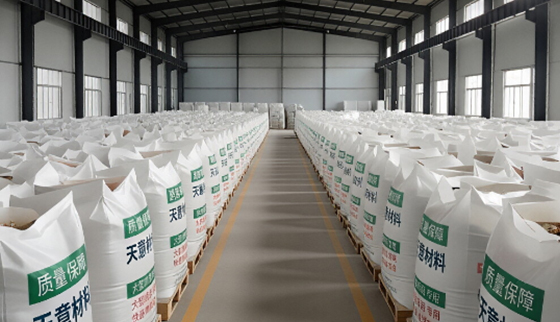
Xinxiang Tianyi Thermal Insulation Materials Co., Ltd. specializes in the research, production, and export of refractory materials. Our products include low porosity clay bricks, high alumina bricks, mullite bricks, insulating fire bricks, refractory castables, and customized refractory products. We provide professional refractory solutions according to different industrial furnace operating conditions.