Selection and Application Optimization of Refractory Materials for High-Temperature Industries
In high-temperature industrial production processes such as steel, cement, glass, and ceramics,
refractory materials play a crucial role as a "thermal protection barrier."
Their core task is to maintain structural stability and service life under complex environments characterized by high temperatures,
chemical corrosion, and mechanical wear.
Therefore, the scientific selection and optimization of refractory materials is an important issue for improving the efficiency of industrial kilns and reducing maintenance costs.
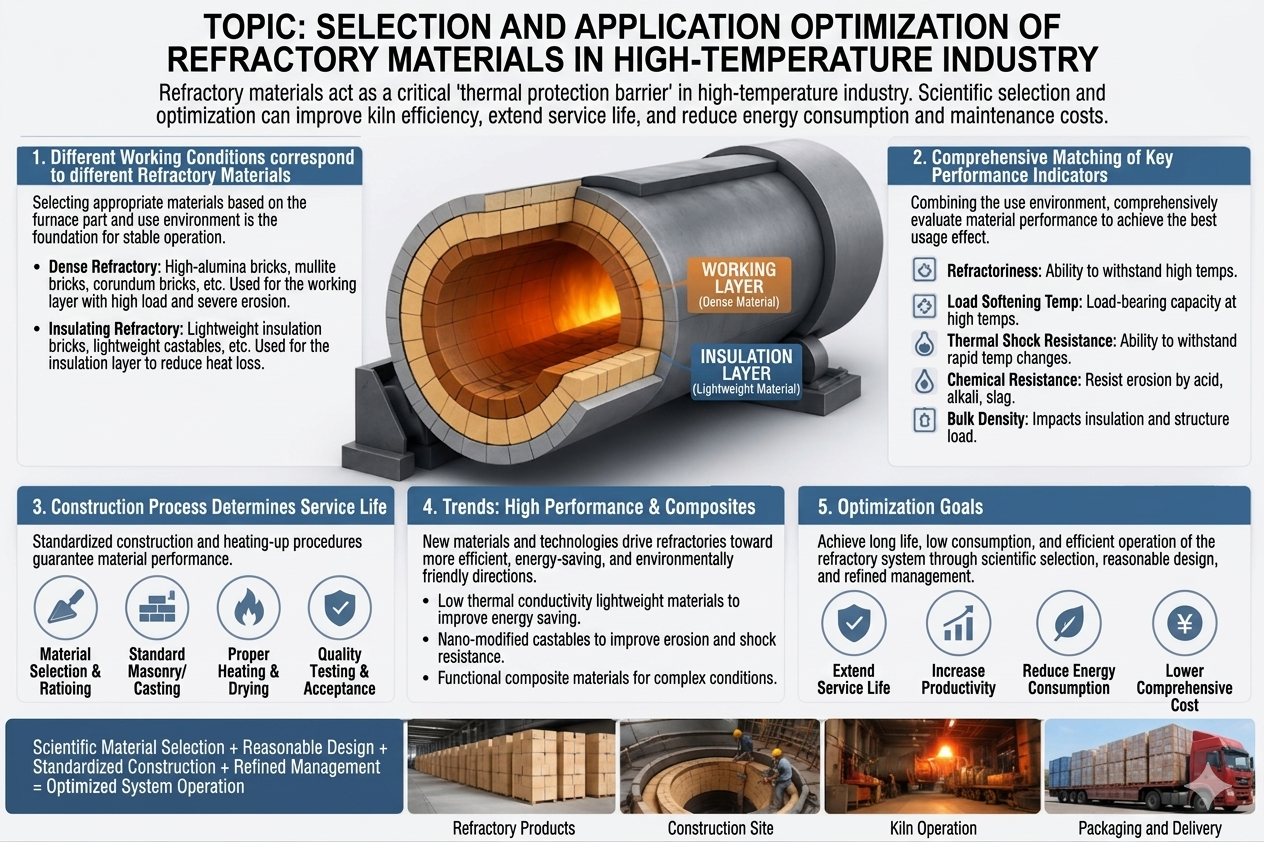
First, different operating conditions require different types of refractory materials. Common dense refractory materials such as high-alumina bricks, clay bricks, mullite bricks,
and corundum bricks are suitable for high-temperature load-bearing areas;
while lightweight insulating bricks and lightweight castables are mainly used in the furnace body insulation layer to reduce heat loss and improve energy utilization efficiency.
For example, in the lining structure of rotary kilns or blast furnaces,
a composite structure design of "working layer + insulation layer" is usually adopted to achieve a balance between refractory performance and energy saving.
Second, material performance indicators are the core basis for selection, including refractoriness, load softening temperature,
thermal shock resistance, bulk density, and erosion resistance.
In practical applications, a higher single indicator is not always better;
rather, a comprehensive matching based on the usage environment is necessary. For example, areas with frequent temperature fluctuations should prioritize thermal shock resistance,
while highly corrosive environments require enhanced resistance to chemical attack.
Furthermore, construction techniques significantly impact the lifespan of refractory materials. Even high-performance materials can suffer from cracking and spalling if the casting, construction,
or furnace drying processes are not standardized.
Therefore, standardized construction and reasonable furnace drying curve design are crucial for ensuring the stable operation of refractory systems.
With increasingly stringent industrial energy conservation and environmental protection requirements, refractory materials are developing towards higher performance,
lighter weight, and more functional composites.
For example, new products such as low thermal conductivity lightweight materials and nano-modified castables are gradually replacing traditional materials.
In conclusion, the scientific selection and system application optimization of refractory materials are not merely material issues, but a comprehensive engineering project encompassing design,
construction, and operation management, which is of great significance for improving the overall efficiency of high-temperature industries.