How to Choose Insulating Bricks for Heat Storage Tank Covers? Insulation Structure and Construction Guide
In glass, metallurgy, building materials and other high-temperature industries, heat storage tanks are important thermal equipment. Their top structures are continuously exposed to high temperatures, thermal radiation and heat transfer.
During furnace insulation projects, more attention is often paid to furnace walls and bottoms, while the top insulation structure may receive less attention. In practice, however, the insulation performance of the heat storage tank cover can also affect overall heat loss and the external surface temperature of the equipment.
Therefore, when installing insulation on the top of a heat storage tank, refractory and insulation materials should be selected according to the operating temperature, structural design and site conditions.
1. Why Is Good Insulation Important for the Top of a Heat Storage Tank?
A heat storage tank contains and transfers a large amount of thermal energy. If the top insulation layer is insufficient, the material has unsuitable thermal conductivity, or there are significant gaps between insulation components, heat may continuously transfer to the outside.
Typical problems may include:
High external surface temperature;
Excessive heat loss;
Uneven temperature distribution;
Damage caused by long-term thermal cycling;
Frequent maintenance of local insulation areas.
Therefore, insulation design should consider not only the material itself, but also the material combination, thickness, structural stability and installation quality.
2. What Properties Should Insulating Bricks Have?
The selection of insulating bricks should be based on the actual operating conditions rather than density alone.
Temperature resistance:
The material should meet the actual operating temperature requirements with an appropriate safety margin.
Bulk density:
Lower density can help reduce structural weight and may provide better thermal insulation performance.
Thermal conductivity:
Low thermal conductivity is beneficial for reducing heat transfer through the insulation system.
Thermal stability:
Heat storage tanks may experience repeated heating and cooling cycles, so insulation materials should have good resistance to thermal cycling.
Dimensional stability:
Excessive shrinkage or deformation during long-term heating can affect joints and create local thermal bridges.
3. A Heat Storage Tank Cover Should Be Considered as a Complete Insulation System
In practical applications, insulation performance normally comes from a combination of several layers rather than a single material.
Depending on the equipment design and temperature conditions, a system may include a refractory layer, insulation layer and protective structure.
The refractory layer mainly provides high-temperature resistance and structural protection.
The insulation layer reduces heat transfer to the external environment.
The protective structure helps improve overall stability and protects the insulation system during installation and operation.
The specific material combination and thickness should be determined according to the actual operating conditions of each project.
4. Key Points During Insulating Brick Installation
Construction quality is just as important as material selection.
Before installation, the substrate should be inspected and cleaned to remove loose materials and debris.
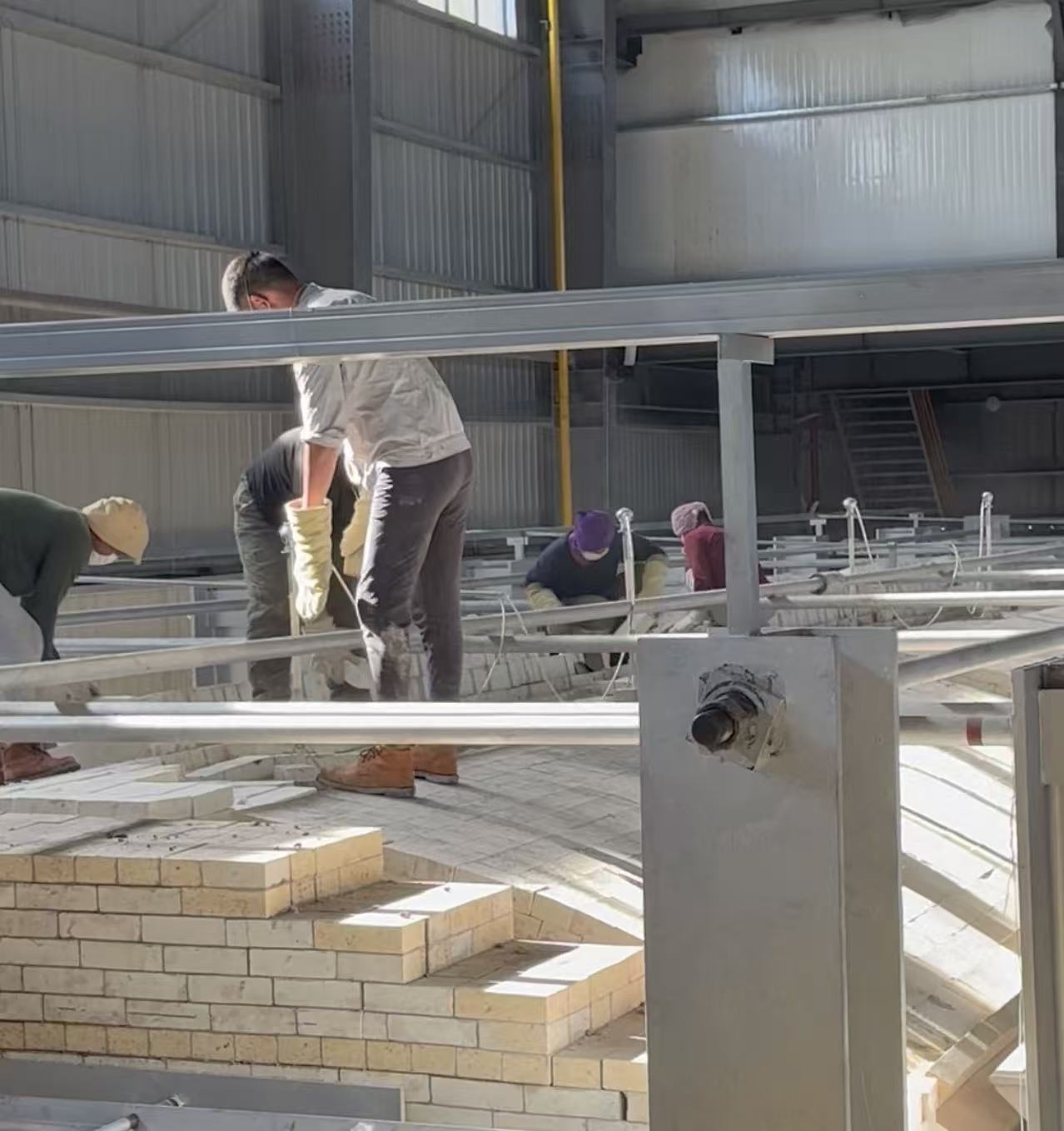
During installation, the arrangement of insulating bricks and the size of joints should be properly controlled. Excessive gaps may create local thermal bridges and increase heat transfer.
Special attention should also be paid to connections between different materials to reduce local stress caused by structural changes.
Typical construction procedures include:
Substrate cleaning;
Layout and dimensional inspection;
Insulating brick installation;
Joint control;
Local cutting and adjustment;
Connection with other insulation materials;
Final inspection.
Material performance + proper insulation structure + correct installation are all important for achieving reliable insulation performance.
5. Why Does On-Site Experience Matter?
Industrial furnace insulation is not simply a matter of installing insulation materials.
Different heat storage tanks have different structures, temperatures, dimensions and operating conditions. Even when the same material is used, different designs and installation methods may result in different performance.
For this reason, insulation solutions should be developed according to actual site conditions.
For operating furnaces, temperature measurements, structural inspections and operating-condition analysis can also be used to identify weaknesses in an existing insulation system and develop targeted improvements.
Conclusion
The insulation of a heat storage tank cover is an important part of the overall thermal insulation system of high-temperature equipment.
Proper selection of insulating bricks and other refractory insulation materials, combined with a suitable insulation structure, can help reduce heat transfer to the outside and improve thermal stability during operation.
If your heat storage tank, industrial furnace or other high-temperature equipment has high external surface temperatures, damaged insulation or requires an energy-saving upgrade, you are welcome to contact us with your operating temperature, equipment dimensions and site photos. We can discuss suitable refractory and insulation materials and technical solutions according to the actual working conditions.