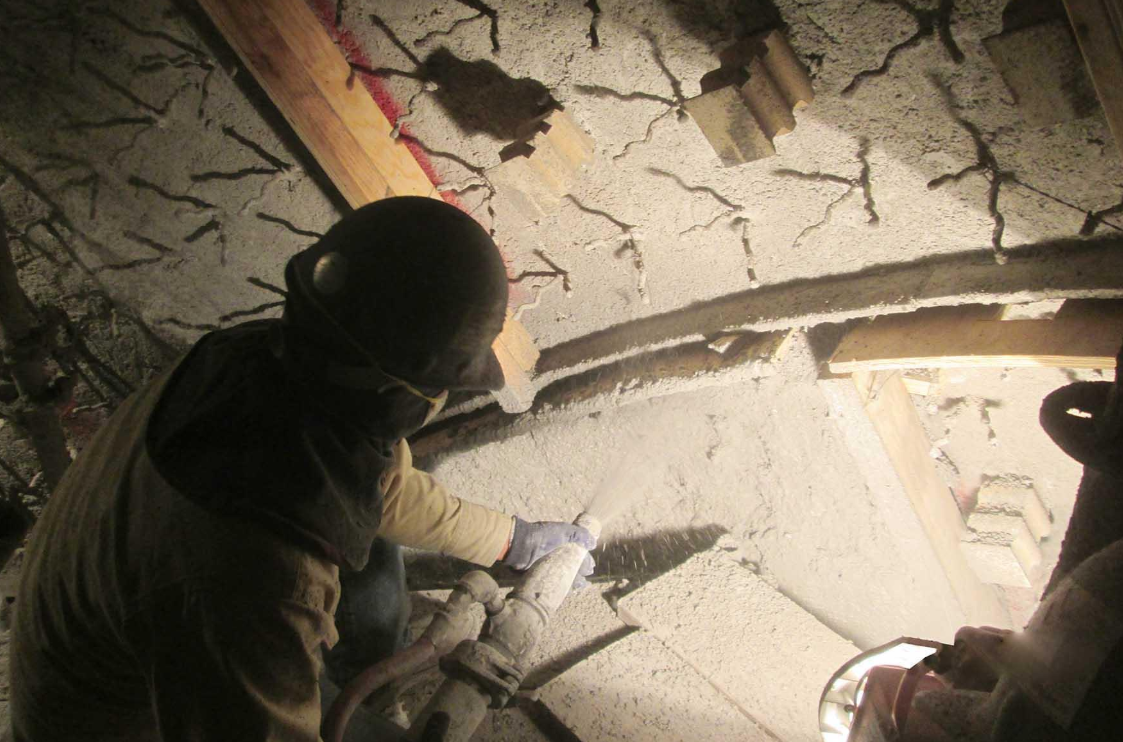
Refractory bricks are widely used in the linings of high-temperature furnaces, kilns and industrial heating equipment. After long-term exposure to high temperatures, thermal shock and mechanical wear, refractory bricks may crack, spall or become severely damaged. The damaged lining must then be removed before repair or relining.
1. Manual Removal
Manual removal is a traditional method for removing damaged refractory bricks. After the furnace has been sufficiently cooled, workers use pneumatic picks, crowbars, hammers and other tools to break and remove the damaged bricks.
This method requires relatively little equipment and is suitable for small repair areas. However, it is labor-intensive and relatively slow, with significant noise and dust during demolition.
2. Mechanical Removal
Mechanical demolition commonly uses hydraulic breakers or similar equipment to remove refractory linings.
Compared with manual removal, mechanical equipment can significantly reduce labor intensity and improve working efficiency. However, the impact force and demolition depth must be carefully controlled. Improper operation may damage the furnace shell, furnace structure or the refractory layer that needs to be retained.
3. Controlled Blasting
Controlled blasting may be considered for large-scale refractory lining or furnace demolition projects.
The blasting plan must be professionally designed according to the furnace structure, refractory thickness and demolition area. Strict safety measures are also required.
Controlled blasting can provide a short demolition period and is suitable for large-scale projects, but it involves higher technical and safety requirements and must be performed by qualified professionals.
4. Comparison of Removal Methods
| Method | Advantages | Disadvantages | Suitable Applications |
| Manual Removal | Low equipment cost, flexible operation | Slow and labor-intensive | Small repair areas |
| Mechanical Removal | Higher efficiency, lower labor intensity | Higher equipment cost, risk of structural damage | Medium and large furnace repairs |
| Controlled Blasting | Very fast for large-scale demolition | High technical and safety requirements | Large-scale demolition |
Conclusion
The appropriate refractory brick removal method should be selected according to the furnace type, lining condition, demolition area, construction schedule, equipment availability and safety requirements.
Manual removal is generally suitable for small repair areas, while mechanical demolition can be considered for medium and large furnace maintenance. For large-scale demolition projects, professional engineers may evaluate whether controlled blasting is appropriate.
After removing the damaged refractory bricks, the remaining lining and furnace structure should be inspected and cleaned before installing new refractory bricks or refractory castables.