Refractory bricks are generally fired at temperatures ranging from 1320°C to 1600°C, while some specialty refractory bricks require firing temperatures above 1700°C. The soaking time is typically 4–12 hours, and the complete firing cycle, including heating, soaking, and cooling, usually takes 48–120 hours. The exact firing schedule depends on the raw materials, chemical composition, brick size, and performance requirements.
Firing Temperature of Different Types of Refractory Bricks
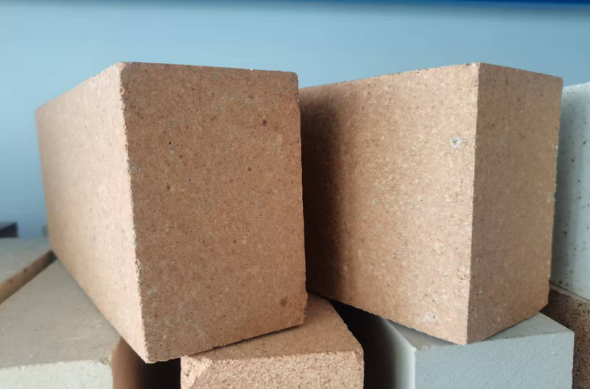
Fire Clay Bricks
Fire clay bricks offer excellent thermal stability and cost-effectiveness, making them widely used in industrial furnaces and thermal equipment.
High Alumina Bricks
The firing temperature varies according to the alumina (Al₂O₃) content.
Grade III (48%–60% Al₂O₃): 1350°C–1450°C
Grade II (60%–75% Al₂O₃): 1450°C–1500°C
Grade I (≥75% Al₂O₃): 1500°C–1600°C, with some premium grades fired above 1700°C
Typical soaking time is 6–10 hours, and the total firing cycle ranges from 72 to 120 hours.
Silica Bricks and Semi-Silica Bricks
The heating rate must be carefully controlled to prevent cracking caused by quartz crystal transformation during firing.
Special Refractory Bricks
Some specialty refractory bricks, such as magnesia-carbon bricks and silicon carbide bricks, are chemically bonded and only require heat treatment at 400°C–600°C. Sintered specialty bricks are generally fired between 1600°C and 1750°C.
Note: Ordinary clay building bricks are fired at 900°C–1100°C and should not be confused with refractory bricks.
Key Factors in the Firing Process
1. Firing Temperature vs. Refractoriness
Firing temperature refers to the kiln temperature required to densify and sinter the brick body. Refractoriness is the temperature at which the material begins to soften under high heat, usually above 1580°C. The firing temperature must remain below the refractoriness while ensuring complete sintering.
2. Firing Cycle
A complete refractory brick firing cycle consists of three stages:
Heating: Removes moisture and volatile substances.
Soaking: Promotes densification and stable crystal formation.
Cooling: Controls thermal stress and minimizes cracking.
In tunnel kiln production, refractory bricks typically require several days to complete the entire firing process.
3. Factors Affecting Firing Temperature and Time
Several factors influence the firing schedule, including:
Higher alumina content requires higher firing temperatures.
Larger bricks need longer soaking periods.
Lower porosity and higher density demand longer firing cycles.
Lightweight insulating bricks are fired at relatively lower temperatures to preserve their porous structure.
Conclusion
The firing temperature of refractory bricks generally ranges from 1320°C to 1600°C, while some high-performance specialty bricks require temperatures exceeding 1700°C. Proper control of firing temperature, soaking time, and cooling rate is essential for achieving excellent strength, wear resistance, thermal shock resistance, and long service life. Selecting the appropriate firing process according to the brick type ensures reliable performance in high-temperature industrial applications.